My Heart Belongs To Dada

May contain spoilers

The Force Awakens (J. J. Abrams, 2015)

I was seven when Star Wars came out – and I’d swear it had the subtitle then, but I suspect it was a couple of months into the run. I’d not seen The Searchers, The Dam Busters, Hidden Fortress or even Triumph of the Will, so it felt original. I’d probably seen Flash Gordon and Buck Rogers serials, and at some point the Glen A Larson version showed up. I would have seen The Wizard of Oz, but didn’t make the link to Star Wars, but both were modern fairy tales and I knew them, albeit via panto and Disney and Ladybird Books. There was a novelisation, apparently by Lucas, which suggested earlier segments. I didn’t yet know The Lord of the Rings.

There was a space race of blockbusters — Close Encounters of the Third Kind, Empire Strikes Back, Superman — and at some point there was Star Trek the movie, nicknamed The Slow Motion Picture or The Motion Sickness and boy was it dull. But we saw the gang coming together for One More Mission and there’s that extraordinary ten minute sequence when Kirk and Scottie check out the old girl on the big screen. Talk about your male gaze.

And years passed and puberty hit and Empire was clearly the best of the three and the three prequels happened. Oddly the BBC paid me a lot of money to write something about sf for their website and to review the novelisation. I went into The Phantom Menace knowing the plot. But then (spoilers) we knew the ending — Little Orphan Annie Kin is going to go wrong. The poster told us. There were call backs — more westerns, an attack like the one on the Death Star, but only C3PO, R2D2 and x to link us to the trilogy. There was Obi Wan Kenobi, but in an odd non-Guinness style by Ewan McGregor. The prequels were pants.

And years passed and that seemed to be that — although there was an odd Star Trek reboot that felt more like Star Wars, and director J.J. Abrams clearly preferred that franchise.

And then Disney bought Lucas (not Lucas Entertainment) in a no-brained multi billion deal that would pay in terms of merchandising alone, even without a third trilogy and spin offs. Our friend would be back.

So what happens next? Well, Han and Leia retire to the suburbs and Uncle Luke bounces their kids above his knee. Although Han did turn into seventies dad in the original.

Well, Abrams only has one one thing to do — to not kill the golden goose. Because, frankly, the magic bean counters at Gold Mouse Central will have calculated that the deal is repaid by merchandising alone — and endless iterations in Lego.

So we shake the magic eight ball of plot and we find an orphan with exceptional abilities, the finest pilot in the galaxy, a cute robot, a wise cracking sidekick, the finest pilot in the galaxy and a new evil man in black to recreate the original plot, and bring back the older versions of the old gang. This is somewhere between fan service and prick tease — we know from the poster that Han, Leia, R2D2, C3PO, Chewbacca and the Millennium Falcon are back, and can make a few shrewd deductions about Skywalker’s absence from the poster but Hamill’s name on it. There’s a balance to be struck between delayed gratification and seeing what we want.

In a sense the original films were reruns — variations on Buck Rogers and the Flash Gordon Lucas had wanted to make. Both the later films in the trilogy and then the later we-shall-not-speak-of-it trilogy ape that, albeit with diminishing returns. The secret plans of The Death Star (which presumably are on file at the local council offices) are the secret map to Luke, entrusted to the faintly double entendred BB8, the cat to R2D2’s puppy, and inevitably this ends up on the not Tattooine desert planet which is home to this film’s orphan du jour, the kick ass Rey. BB8 is antenna in hand with ex-stormtrooper Finn, whose conversion to the light side is as easily and convincingly accomplished as Annie Kin’s was to the dark.

Incidentally, the crapness of this generation of storm troopers — shuffling embarrassedly out of shot at one point — could be used as a racist argument against diversity… Ooops.

And through such frail travelling coincidences we assemble the old team and the old set pieces — scavengers, trips across deserts, scrap dealers, strangulation by the Force, a cantina, hologram chess… Fan service. Give us what we want.

A character is killed off. Oh yes — although apparently the director was so enamoured with the actor that he is completely unexpectedly brought back. Because the thing we know about popular culture — I’m looking at you, Doctor Who — is that death is simply a matter of contractual obligations. But then, death didn’t slow Ben or Yoda down. So that death that comes later is clearly a wrench but there are two more films to play out.

And so we come to the new Big Bad, so evil he has to kill someone à la Vader, Kylo Ren, who hero worships a Vader he plainly doesn’t know. He appears to have a helmet fetish, which cramps in his impossibly bouffant hair style. Incidentally, his looks seem to be be more like an Alan Rickman than his putative father, suggesting his mother has the same kind of morals as Annie Kin’s mother with her “I got knocked up by the Force” cover story. This is a man, nay a boy, with anger management issues, who would throw his toys out of the pram with or without the Force, as witnessed in his really stupid light sabre attacks on consoles. Quite what the even Bigger Bad, Gollum Snope, sees in him remains a mystery.

It turns out that all the films are about relationships between fathers and sons — from Annie Kin’s anonymous trick to Darth Emo’s petulance. If we compare it to perhaps the only other multi-chaptered, anachronous saga — Shakespeare’s War of the Roses plays — we can see how the quasi-patricide of Richard II by Henry IV is still playing out in the relations of (spoilers) Hal and Falstaff and even Henry VI. We have divided good and evil fathers, fathers who can’t measure up, sons who can’t measure up (and as far as I recall, the spoiler of Luke-I-am-your-father, supposedly not known about when Star Wars was filmed and Leigh Brackett’s contribution to the saga, was there in the comic book adaptation released before Empire). Annie Kin’s missing father (and thus under developed superego if you buy Freud) is played out in Darth Emo’s over compensation.

But fathers are there to be obeyed. Well, the good ones.

When Star Wars was released in the late 1970s we had had a run of adult themed, grown up sf movies and were desperately in search of heroes in the post-Vietnam, post-Watergate disillusionments. It made us children again — even those of us who were children. Arguably, Lucas and then Spielberg infantilised the sf genre with their fort da sagas. Again, again! And made shit loads of money. Fathers and sons, sons and fathers (but Indy was the dog).

The Force Awakens is a cosy old set of clothes and slippers and presses the buttons expertly. The question the remaining two films will have to answer is the nature of mothers and sons, but more importantly daughters and mothers. It is to be hoped that Rey gets to stay kick ass, rather than face the domestication Leia endured from agent to slave.
Out Damned Scott

The Martian (Ridley Scott, 2015)

I hate this. I really hate this. I really don’t have the words to begin to describe how much I hate this. I mean, everyone else loved The Martian.

For a decade or so, I’ve wrestled with two dilemmas:

a) is Tony Scott a better director than his brother?
b) is Ben Affleck a better actor than his old mucker Matt Damon?

I’d think I’d have it resolved and that it was Tony and Ben and then I’d see a film directed by Tony or Ben and suspect I was wrong. I realise that Tony died in tragic circumstances and his oeuvre is complete, but he gave us The Hunger and (the best Tarantino film) True Romance. On the other hand, Ridley has two genuine masterpieces: Alien and Legend (not, obviously, to be confused with the recent remake). Tony rarely seemed to hint that his films were anything more than vacuous tosh (although with an African American protagonist surprisingly often), whereas Ridley seems to try for the Meaningful and miss, whilst white washing all too often.

Then there’s Matt and Ben. Meh. I’m a fan of Kevin Smith films. What can I say?

Everyone else has done the jokes already — if you want a character who gets left behind and needs to be rescued, Damon’s your man. You’d think he’d get the message. So, as in the book, Matt Watney (Watt Damon), has been left behind in a sandstorm on Mars and begins to work out how he can survive until the next mission survives. There’s rather more of the crew than there is in the book, softening us up so we actually care when one of them dies.

And then, otherwise, there’s a fidelity to the book. Damon might strike you as being more buff than normal, but that allows for the malnutrition of later sequences and film is much better at given you a tabula rasa onto whom the audience can project emotions than a book in which the author has to tell you what they are thinking. The mission log can be used to justify voiceover, but it isn’t overwhelming.

The fidelity is a problem. Just as it is a bit of a wrench when we cut away from Watney to Earth for the first time, so it is here. The parallel editing is surprisingly clunky as characters wonder “I wonder what he is up to right now?” or “Do you think he’ll work this out?” out loud. For a Ridley film, the cast is surprisingly more multiethnic than of late, although there are a couple of whitewashing. And there’s also, spoilers, some additional sequences at the end to Get All Meaningful. To turn it into a recruitment ad for NASA.

And somehow Damon can pull that odd combination of nothing-special and resourceful man. The NASA team balance that concern and bureaucracy. This is a film — like the book — where the only enemies are the cold equations. The lone astrogating genius perhaps needed to have his performance dialed back a bit, and I was uncomfortably reminded of the Random Pot Smoking Rastafarian in Thelma and Louise. There’s a geeky Lord of the Rings reference in the novel which gets repeated here, with added nuance that Sean Bean is in the scene.

And of course, we know that Sean Bean has to be killed off. It’s what he does well.

So, unbelievably, and I hate this, Scott has produced a reasonable film. I think Moon and Gravity pull off similar situations of isolation with more aplomb, and there are similar moments of massive disbelief suspension, but this might be the first non-crap Scott film since well… well… his Hovis ads.

I’ll Buy That For A Dollar

RoboCop 3 (Ted Dekker, 1993)

The third film of a franchise comes with low expectations – by then none of the original cast are in it, or the protagonist faces an evil double, or everything is shot in 3D, or the original premise is junked. Diminishing returns doesn’t come into it.

Yet RoboCop 3 is better than it has any right to be. RoboCop (Paul Verhoeven, 1987) was the director’s now trademark hyper violent satire on the corporate world, in which an almost fatally wounded cop (Alex Murphy (Peter Weller)) is made into a cyborg and forced to fight crime. He/it is the property of OCP (Omni Consumer Products) who clearly have an eye on the privatisation of the state for profit. In the sequel – directed by Irvin Kershner who directed the best (and second) instalment of a certain other trilogy – OCP are foreclosing on Detroit for non-payment. Detroit, by then, is a criminal warzone, by OCP envisaging a new gleamy city, which they will fund and profit from.

That city is still the Promised Land in the third film, but Detroit residents are being evicted supposedly to make way for the development. Functions of the state are clearly privatised and outsourced, with a new villain in the shape of Paul McDaggett (John Castle) and a new CEO in the shape of Rip Torn from The Larry Sanders Show. The Detroit police become increasingly wary of McDaggett’s plans, as rebels fight back in Old Detroit. When RoboCop’s (now Robert Burke) partner Anne Lewis (Nancy Allen) is killed – she really ought to wear that armour she has – he sides with them against OCP, erasing the fourth directive which should prevent such things. OCP, meanwhile, are facing financial ruin and a corporate takeover from Japan. Head office send in an agent, Otomo (Bruce Locke), to try and reassert control.

It is satisfying if ironic, of course, to see the skewering of a corporation in a Hollywood movie – although of course Orion went belly up in 1999. One character tells us “There is no silver lining, only corporate scumbags who want to line their pockets” and McDaggett snarls at the CEO “If you’re just now figuring out the line between big business and war is a little blurry, then you’re further over the hill than they say you are.” OCP’s ownership of people and land is reasserted again and again – memories are property, ideas are property. The media colludes in corporate brainwashing.

Detroit was, of course, the powerhouse of the American economy, the centre of the car industry – and it is telling that RoboCop is compared to a Chevy when he needs repairs. It appears that, albeit for a brief period, the tension lines of race could be ignored in the face of working class solidarity in industrial capitalism. But outsourcing and rationalisation led to the almost complete destruction of the industry and Detroit was indeed to declare bankruptcy. African American ghettoes surrounded by declining white suburbs was the result. Motown moved to Hollywood.

The trilogy has a range of African American characters, albeit their race is not commented on at all – Johnson (Felton Perry) is a Vice President throughout, surviving when many others don’t, a visible success story. Sgt Warren Reed (Robert DoQui) is the grizzled police sergeant, who becomes the moral heart of the film. Meanwhile, the new character Bertha (C. C. H. Pounder) is a smart and charismatic leader of the rebels. (There’s another character, a pimp (Ron Leggett), who feels rather more stereotypical of Hollywood film, an echo of the mayor from the second film and a criminal from the first.)

Age has not been kind to some of the special effects – whilst the stop motion animation of the police robot was always clearly a model, flying RoboCop is clearly blue screened in. Alongside the ultraviolence and a rather awkward use of the word “slag”, we also have a child protagonist, Nikko (Remy Ryan), of mixed ethnicity and, surprisingly, less cute than you’d fear. She is a computer genius – echoes of from Lex (“Oh – a UNIX!”) Murphy Jurassic Park. Indeed, RoboCop’s feminist credentials are stronger than Jurassic World.

Of course, what doesn’t sit well is the final climactic shoot out which leaves the Detroit Police as heroes. We are clearly meant to punch the air: “It’s time to show how real cops kick ass”. But news stories about the police have been problematic of late. Here, the Repressive State Apparatus wins out over corporatism – and that is perhaps a hollow victory for the citizen.

Meanwhile, the CEO of OCP – an anagram of COP, of course, even if I kept hearing it as OCD – has visions of corporate rebirth: “I realize that it looks bad but, I mean, maybe our plans were overambitious. Let’s start a skoshy bit smaller. Let’s gentrify this neighbourhood, build strip malls, fast food chains, lots of popular entertainment. Whadda you think?”

Regeneration as land grab. Still so familiar.

Inheritance Rites

TRON: Legacy (Joseph Kosinski, 2010)

tronSo, I accidentally saw TRON: Legacy.

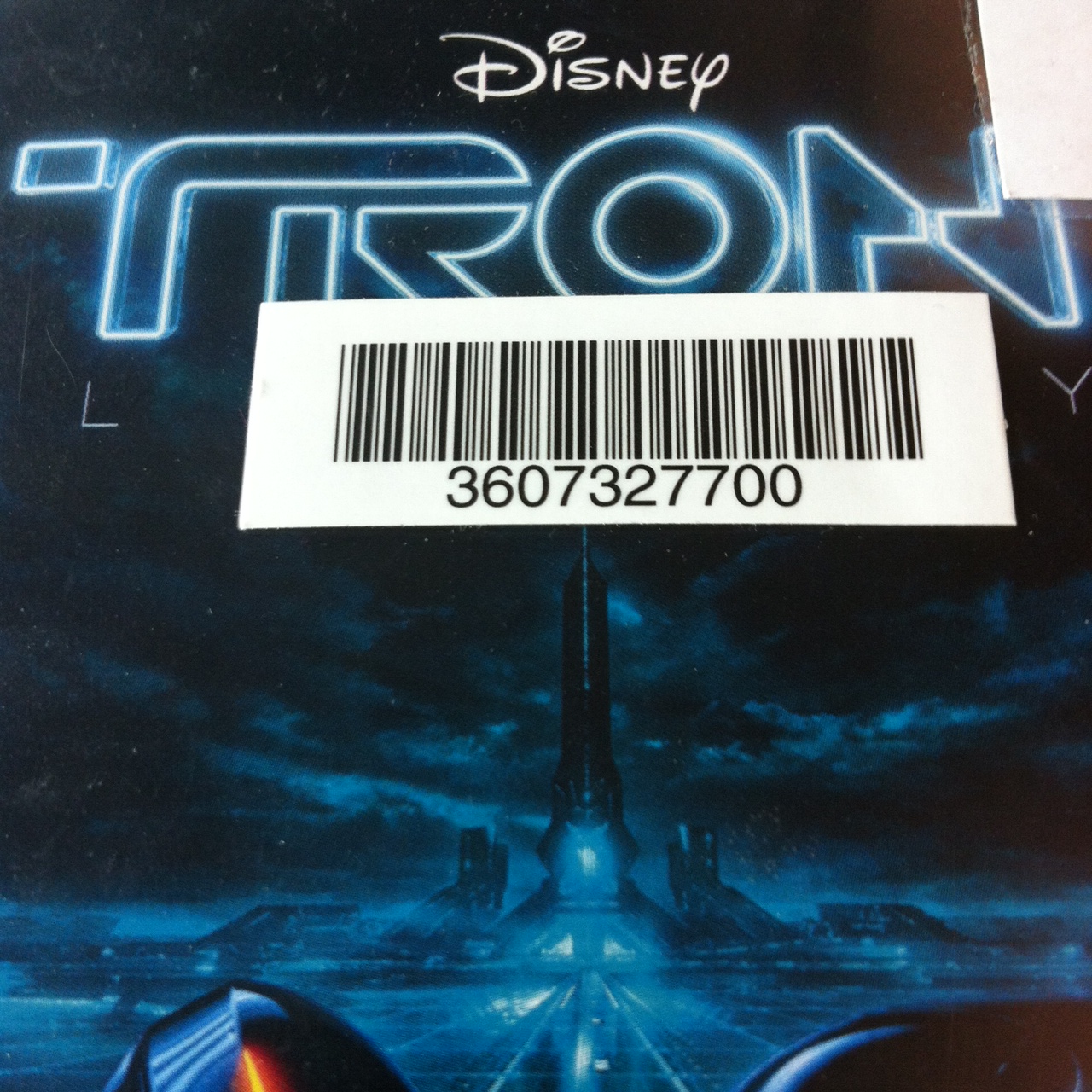
I’d planned to watch it, but I wanted to rewatch TRON (Steven Lisberger, 1982) first, but it turned out that the bar code was slapped across the word Legacy in a somewhat misleading manner.

So I’m coming to this without having seen TRON since 1999 or 2000, whenever it is I wrote the Pocket Essentials Cyberpunk volume.

There will be spoilers.

Continue reading →

Bigger, Faster, Louder, Better

Jurassic World (Colin Trevorrow, 2015)

You know precisely what you’re going to get.

You have the big sexy project that some people are wary about.

You have the ambivalent capitalist who may cut corners.

You have the amoral scientist.

You have the maverick expert.

You have the jeopardy parcel.

You have the people you want gotted, gotted.

You have the bloody obvious sequel hook (which they’ll probably ignore).

So, these kids’ parents are getting divorced for reasons that aren’t readily apparent and so whilst ma and pa lawyer up, dinosaur-obsessive (he’ll have to grow up) and emo-boy (he’ll have to lighten up) are sent to Jurassic World, run by Aunty Spinster who never seems to answer her phone (she needs to learn about motherhood).

Jurassic World, a sequel to Jurassic Park — yanno where so many people died — needs a new dinosaur to beef up visitor numbers and be bigger, faster, louder and better than the last one — yanno just like sequels in movie franchises. Meta. You remember the merchandising room in Jurassic Park (1993)? Just like that kind of meta. And comic-relief  technician/geek Lowery Cruthers (Jake Johnson) wears a Jurassic Park/Jurassic Park t-shirt. (He’s also told to take it off, because what kind of crazy tattooed scientist dude would wear an offensive shirt when there might be press around).

So, to get the bigger, faster etc dino they call in the fiendish Dr Wu (srsly) to miss up the DNA of Indominus rex, a name daft enough that at least the characters have the grace to laugh at. Rather late in the day, they’ve wondered if the walls surrounding it are high enough, although What Could Possibly Go Wrong? They’ve called in maverick expert (Chris Pratt — you know he’ll be a maverick because he lives in a trailer/cabin and tinkers with motorbikes) who warns them Things Could Go Wrong and we think Of Course They Can, Otherwise There’s No Movie.

It’s not clear whether he’s employed on another part of the island by the same company or he’s employed elsewhere or quite what we’re meant to think of his West African friend Barry (Omar Sy). The film’s not big on backgrounds.

So stuff goes wrong and they start closing down the park, only the Jeopardy Kids are still out there, at precisely the point where Rex is hovering. Small world. Big Jeopardy. They also get to find the original Jurassic Park and — well, I kept thinking, this world is smaller, faster, louder, worse, because the geography seems rather tight. I suspect we have a cut scene, too, as Emo asks Baby if he still has those matches even though we haven’t already seen them.

Oh there’s some neat stuff with velociraptors and a few jokes with feet being bird feet not dino feet and the T Rex is saved … but the final stand off is a rabbit out of a hat. Aunt Spinster is very odd — robot eyes at start (business woman out of depth?),  awkward at doing the Unresolved Sexual Tension, does a weird transform into action heroine thing without ditching the high heels, does — for once — grab the bloody gun. Aside from all the dinosaurs (presumably) she’s pretty well the only woman in the film — there’s tearful techy girl and divorcing ma, but that’s about it. Oh, no, I forgot, there’s her clueless PA.

There’s something going on too about not being quite qualified to drive though — John Hammond substitute Simon Masrani (Irrfan Khan) hasn’t quite learned to fly his helicopter, Emo boy hasn’t quite passed his driving test? If we’re being meta, we might consider we have a tentpole movie (which Legendary Pictures clearly need after their recent box office duds Seventh Son and Blackhat) being directed by someone who has only been low budget before. I suspect, however, all the real work is done in special effects and second units.

And I haven’t even gotten to say WTF about evil military guy Vic Hoskins (Vincent D’Onofrio) who figures the dinosaurs have military value, just like the Company in the Alien franchise. Let’s take off and nuke them from orbit.

ETA: this is pretty sharp on the attitude of the film to women:

Fast and Furiosa, Or: Foiling this Fiend’s Foul Plots

Mad Max: Fury Road (George Miller, 2015)

Just to be clear, the Mad Max of the title should not be confused with that other Max.

But basically we have a feature-length episode of Wacky Races directed by whoever did those Lynx adverts. Only feminist. Honest.

Because that woman who did The Vagina Monologues helped out.

In Road Runner country — although actually it’s a whitewashed Namibia.

It’s post apocalypse time and Mad Max (Tom Hardy) is kidnapped and dragged back to a citadel that produces water and mother’s milk to be used as a blood bank to Tony from Skins (OK, Nux (Nicholas Hoult)).  Meanwhile, Imperator Furiosa (Charlize Theron) has been employed to drive a tanker to a refinery, only this is an escape bid for her and the wives of citadel leader Immortan Joe (Hugh Keays-Byrne). The citadel sends out its best warriors and drivers to catch them.

Presumably one of the genetic abnormalities caused by the apocalypse is pale skin, because almost everyone at the citadel looks pasty. The women are of various ethnicities, and presumably mutant free, and I’m guessing they had been kidnapped.

The chasers include Dux, with Max doing a Bane impersonation on the front of his vehicle and a guy with a flame-throwing, double-necked Fender guitar because, hey, in this scarcity world we can afford to waste gas like that. And someone’s been looking at too many heavy metal album covers. Seeing a means of escape, Max jumps ship from the notably rubbish chasers and joins Furiosa, along with Nux.

There’s a bizarre encounter in a canyon — somehow Furiosa has communicated long distance that she can have free passage in return for gasoline, and nobody noticed that she set off to the refinery with a lot of gasoline — and then a pretty sandstorm and then a mudflat (gloriously macabre) and then a meeting with more women, I assume the surviving lifetime subscribers to Spare Rib. And then everyone heads home, somehow avoiding the mudflat.

The action hardly gives you a chance to breathe, although it is mostly followable even if it takes a big dollops of suspension of disbelief. Max is reluctant to give his name, but then I caught barely any of the women’s names.

And somewhere, as you try to work out if the Bechdel Test might be passed in a multi-million dollar franchise, you wonder whether it might not be a much better movie without young Max. He’s clearly heroic and knows both ends of a Glasgow kiss, grunts appealingly and can’t make eye contact in a Heather Ledger/Brad-Pitt-in-Twelve Monkeys kind of way,  but is he necessary for anything other than getting the project green lit, twenty years after first mooted. There’s Ethan Edwards and Shane in the mix of course, as well as the man with no name.

However, whilst the plot is about women being more than baby factories, there is a tendency to slide back to being the hope for the future and the seeds of life to come and female as nature. There is a degree of objectification — but less so than say Princess elia by the time of being chained up in Return of the Jedi. They do seem to be able to hold their own in a fight and there is a minimum of love interest as characterisation. If there’s little character development for them then that’s true of all but Furiosa.

Curious this: a film in which at least three characters find redemption, one way or another, but no character is especially changed.

GRUMPiE

CHAPPiE (Neill Blomkamp, 2015)

So the afternoon was skating on ice — the gallery I was going to go to is now only open Thursday-Monday, but that gave me longer to write stuff in the coffee shop. And when I got to the cinema, they said that they might not show the film, because I was the only person to show. But two people turned up for Insurance (which I may well see sooner or later, but I would have hated today) and apparently that was enough — in fact a second person wanted to see CHAPPiE. But in twenty-five plus years of solo cinema-going I’ve never experienced that. I guess they in theory make a loss, but it hardly encourages me to return. I’d hoped to see it in Westgate on Sea, but that was last week.

So Blomkamp teases us — we have the after-the-event documentary and then we have the eighteen months earlier news footage and then, clearly, he can’t be arsed as we go into standard continuity editing. There’s this RoboCop rip-off police system of robot cops remote controlled by head sets which seems to be bankrolled by the guy who won that Slumdog Millionaire (Dev Patel) competition. Wolverine, meanwhile, has an even bigger badder robot that he’s trying to interest Ripley in.

Meanwhile, in another part of Joburg, Yolandi (Yolandi Visser), Ninja (Ninja), Amerika (Amerika) and Hoodie Guy (Hoodie Guy) have pulled off a drug deal only to be caught by Evil Subtitled Guy (Brandon Auret) who shoots one of them and demands 20,000,000 Rand within seven days. Ninja decides that he will kidnap the guy from Skins to access a RoboCop to… do something or other. Skins chappie, meanwhile, has stolen a RoboCop and has developed artificial intelligence when he clearly doesn’t have any of his own.

RoboCop is the spitting image of Sharlto Copley from District 9, or would be if they hadn’t done all that MoFocking MoCapping. It’s pretty, I grant you, but you too easily forget it’s a RoboCop and it seems to have rather too much servo motion. It needed to be more robotic. Copley gives a great comic performance but Woody Allen was a more convincing robot in Sleeper (Woody Allen, 1973). Then you mix in Blade Runner (Ridley Scott, 1982), because RoboCop has a broken battery — although it’s five days rather than four years. Skins chappie is a younger and more handsome Tyrell, and you keep waiting for the burning so very bright speech. Frankenstein, too, as he’s a bad father and RoboCop gets bullied by some retrobates and some rather unconvincing fire. We have a Meaningful bit when he ponders why his Creator would give a faulty body and you just know that sooner or later he’s going to need a wife, sorry, Bride of RoboCop.

Wolverine’s robot echoes the military suit from District 9, which in turn echoes the suit from Aliens (James Cameron, 1986), or possibly the first one. It’s pretty poor stuff, frankly, which perhaps explains why the South African police force ain’t buying. By now, of course, you have the sense that it’s really an audition piece for Alien This Time It’s Three, in which Copley and Patel are going to play MoCapped aliens as some kind of mismatched buddies. A certain actor presumably was only there for about two days and you have to admire her presence of mind to grab her coat and handbag before exiting in an emergency.

Copley gets to wander around more South African waste grounds and shanty towns and CHAPPiE has a certain amount appeal even if it requires an awful lot of hand waving. Just as Evil Subtitled Guy (random alleged Nigerian) in District 9 wanted Wikus (Copley), so here Evil Subtitled Guy does too. Presumably he’s evil because he’s got knarked at having his perfectly comprehensible dialogue subtitled. There’s a rather better nonwhite acting quotient here — a Black chief of police, Patel of course, Amerika, a television journalist and so forth — but only two females with any significant dialogue. With the exception of Wolverine, I don’t recall anyone getting a backstory.

Maybe I should have gone to see Insurance? Although, of course, it seems to feature Kate Winslet continuing an audition to be Sigourney Weaver.


Tintin and the Tintinnabulating Tinternet

Blackhat (Michael Mann, 2015)

  1. No coloured hats were worn during the making of this film.
  2. This film had four editors — one more than Fifty Shades of Grey.

The best part of the film is a pan across a cell wall of the lead character, Nick Hathaway (Chris Hemsworth), who has two books on his shelf: The Postmodern Condition and The Animal that Therefore I Am. Hathaway is a hacker, imprisoned for getting caught, who is briefly released to help good coder Chen Dawai (Leehom Wang) track down the Evil Coder who has sent a Chinese nuclear power station into meltdown and stolen money on manipulated soy bean futures . Along for the ride, seemingly, is Dawai’s sister, Lien (Tang Wei), whom Dawai had been all-but-pimping to Nick. (When they get together, Dawai is all older borther possessive of her.) She does have computer expertise, but her job is look pretty and to be the reward for the hero.

For all its next three months futurism, this is old school, it’s Heat (1996) but less cool — and I still say L.A. Takedown (1989) was the better movie. We have phone calls arranging meets, we have corpses showing up when we go in search of suspects (and no one gives a fig about forensics), we have hails of bullets making holes in walls but fairly rarely the whitehats, we have devices placed on the bottom of cars, we have helicopter shots of men standing in half completed tower blocks. We have — dear Cthulhu no — the zoom-in on the pixels that takes us into the screen and along wires and down into the mean streets of the circuit board.

None of it makes any sense — this is a film that begins with a volcano but fails to work up to a crisis. The set piece finale felt more early seventies Bond, but with poorer acting. Our computer genius had to go to the spot in Malaysia to work out what the cunning evil plan was rather than using Googlemaps. We have no motivation for the Big Bad — I’m not even convinced we have more than a username. And he isn’t — spoiler — wearing a hat.