Uranus Descending

Jupiter Ascending (The Wachowskis, 2015)

There is no tail.

Once upon a time, there was a suitcase full of money, which was in the wrong hands, and kept falling into the hands of two lesbian lovers – and it was gloriously of its kind and sui generis and said oddly interesting things for lesbianism for two male writers and directors and was ludicrously over designed. But once Bound (The Wachowskis, 1996) was released, the directors opened the suitcase and took the money and made The Matrix (1999) and it was of its kind and soi disant and was ludicrously over designed. It kind of worked as long as you didn’ttake its sexual politics too seriously and got het up over Trinity. And because the film left us wanting more, for once we got this and the conceit of storing humans for energy just fell apart. And so, after produced films and adaptations of manga Speed Racer (2008) and of novel Cloud Atlas (with Tom Twyker, 2012), they put their bid in for either a Star Wars sequel or Marvel adaptation with Jupiter Ascending.

What we have is a fabulously overblown Cinderella cross bed with Beauty and the Beast. Jupiter Jones’s dad (James D’Arcy) had a hilariously inadequate telescope in Russia and is killed in a random burglary before Jupiter (Mila Kunis) is born. Relocated to Chicago, she is forced to clean toilets and sell her eggs in order to buy a slightly less pathetic telescope. This brings her to the attention of the Brassica family – Tightass, Kale and Bok Chou – who own vast swathes of the galaxy and have seeded Earth as a source of anti-ageing cream. Jupiter, it turns out, has exactly the same DNA as the Brassica’s dead mother and thus owns Earth.

A Marvel-style diverse posse (Africa American with Mohawk, one-eyed cigar chewer (I may have imagined the cigar) and blue haired Japanese girl with poorly invisibility cloaked flying motorbike)) are after her, as is half-dog, half-man fallen angel Caine Wise (Channing Tatum). He’s there to protect her, sort of, but he’s being paid, and half of Chicago is temporarily destroyed although no one seems to notice (the humans can be reprogrammed, you see). They seek refuge with Chicago-based Sheffieldian bee keeper Stinger Apini (Sean “marked-for-betrayal-and/or-death” Bean), and before you know it, Jupiter is in the planet Jupiter, dealing with the threatening threesome who for some reason want Earth above all other planets, and can achieve this by marrying her, or something. Jupiter has to be rescued, repeatedly.

Eddie Redmayne has just won a BAFTA for being Stephen Hawking, and frankly his whispering simpers won’t trouble the academy for next year. I’m reminded of his curious performance in Savage Grace (Tom Kalin, 2007), a troubled bisexual teen who may or may not have sex with his own mother. The Freudian reading of that film writes itself, even down to a convenient dog collar of disavowal, and I guess in Jupiter Ascending we have an absent daddy to explain why the Brassica siblings are closer to barking than Caine ever is. As the Jupiter base, the scenery and the plot fall apart bit by bit, the jeopardy is both cranked up (we have a toilet cleaner trying to climb an endless ladder!) and reduced (have these get out of jail free cards). Beneath CGI and possibly the odd bit of latex we have a frustrating number of British accents and Torchwood refugees, who were presumably cheap to buy when the film was in the UK. We have an elephant as a pilot who appears to be called Ganesha, settings which would have John Martin received for his oil paints and a redressed Ely cathedral to Keep It Real.

So Jupiter is great because of her natural genes and Caine is great because of his spliced jeans and we have an sfnal family melodrama where meritocracy never comes into it. Earth as a means of recharging batteries makes as much sense as the Matrix set up, and would make an average episode of nu-Who.

I’m actually depressed to dislike this movie – it’s kind of obvious it’s going to be pants and I was genuinely hoping to be able to make a case for it as the next masterpiece. It’s a film with a female actor at its heart – although it gives short shrift to and forgets about the other women. The sisterhood of her family is under developed, as is the discourse about the sale of her eggs (and Redmayne’s speech about capitalism). I might even have been sold by the Groundhog Dayness of her daily grind, but frankly Shaun the Sheep Movie (Mark Burton and Richard Starzak, 2015) did it better.

ETA: I read this and this as they appeared, obviously, and both are clearly sound points of view. I didn’t reread them until after I wrote my piece. Unconsciously, I evidently channelled the punch line of the second blog. I regret not finding a Michael Caine joke (and since Caine is not a member of the Abrasax clan I was spared the need to find a vegetable joke riffing on his back catalogue) or being snide at the character being called “Wise”.
Sub Text

Fifty Shades of Grey (Sam Taylor-Johnson, 2015)

“Donald Duck in the cartoons and the unfortunate in real life get their thrashing so that the audience can learn to take their own beating.”

The curious thing about the film Fifty Shades of Grey is that it’s got this subtext of vampirism. I mean, you can read it two ways – in Marxist terms and in feminist terms. Not party politically, and not in that shock-horror women get horny too, or the somehow already all too lacking in agency somehow get turned on by giving up agency being all about reclaiming power … this is clearly no more a BDSM manual than it’s a guide to business management.

Our virginal hero, Anaesthesia Steel is substituted for the manflu suffering flat mate to interview communications guru Christian Grey for a student newspaper prior to graduation. Having bagged a parking space right outside the sky scraping phallus that is Grey Mansions, Anaphylactic trips and and falls at Grey’s feet as the first point in a ten sequence of cringe. For all that journalist seems to have become an acceptable job for a female character post-Lane, maybe sleeping with your subject is not smart (see also Iron Man and Superman, sorta). Grey turns the tables on Anatomy and asks her what first turned her on to literature – Jane Austen, Charlotte Brontë or Thomas Hardy. She says hardy, and she’s already demonstrated her Tess pure woman wet blanket qualities whilst he is not yet Alec D’Urberville. He had figured on Austen, no doubt casting himself as Colin Firth/Mr Darcy; I suspect he really should be citing Emily as he’s more Heathcliff than Rochester.

Christian offers her all manner of beautiful things – accommodation, a car, flights in helicopters and gliders, alcohol whilst telling her to abstain, in fact an aspirant upper middle class married lifestyle. (The glider was maybe a little over the top – the footage reminding me of those videos shown in laser video jukeboxes in takeaways in the 1990s.) All she has to do in return is give up free will and sign here. It’s maybe more extreme than the standard terms of employment or the Book of Common Prayer marriage service but, still…* It’s mettafa. SKY TV, live football, telephone calls, broadband? Put up with Page 3.

The interesting sequences start when she plays hard to get – but I fear the tale of Little Orphan Christian and his redemption will take prominence. Anastasia will make her peace with him as with capitalism.

Dakota Johnson seems fair enough as Anastasia, although if you want real kink watch or rewatch her grandmother in Marnie (Alfred Hitchcock, 1964); the film is set on the wrong coast but it channels her mother’s Working Girl (Mike Nichols, 1988) although it lacks a Sigourney Weaver figure. Jamie Dornan is really the character from The Fall, hiding from Gillian Anderson and switching accents to put her off the scent.** (I fell off this series after episode one of season two, so obviously this isn’t a spoiler.) If this film really were radical – and dealing in subjects recently banned on streaming online video in the 2014 amendment to the Communications Act (2003) – we’d get Dornan full frontal, instead he is barely semi. He’s pretty enough and has a Firth look.

The sex could be a whole lot worse. It’s nowhere near as objectifying as usual Hollywood fare. I’m reminded of Alexander Walker’s line (regarding Crash (David Cronenberg, 1996)) that he didn’t know it was possible to be bored and have an erection at the same time. Not that it was arousing. I note from the credits that the film has three editors. Perhaps this explains the antiseptic feel?

Nearly twenty years ago I taught with Mike Sanders, Xavier Mendik and Charlie Blake a popular culture module that included Mills and Boon and Black Lace novels. It’s clear from the reception of such books – all too easily dismissed as formulaic in part because of their audience – that there is a complex connoisseurship and a nuanced set of uses and gratifications for the texts, ranging from erotica to comic relief. I’m pretty sure that Sam Taylor-Johnson – Turner Prize nominated – doesn’t want us to avoid ironised readings. But, having read one Mills and Boon novel that was meta fictive in scope, this needn’t be because a Proper Artist filmed it. But I do suspect it’d be less dull if Grey really were a vampire.

ETA: further thoughts on this film and a British film with a faintly similar theme,   The Duke of Burgundy (Peter Strickland, 2014).

* Compare Helen and Rob in The Archers.

** I’m told the way to get through The Fall is to imagine it as a French and Saunders parody, with Jennifer Saunders as Anderson and Dawn French as Dornan. Curiously the same casting works as Steel and Grey.

If You Tolerate This Your Children Will Be Next

Conscience and Conflict: British Artists and the Spanish Civil War (Pallant House, Chichester) 

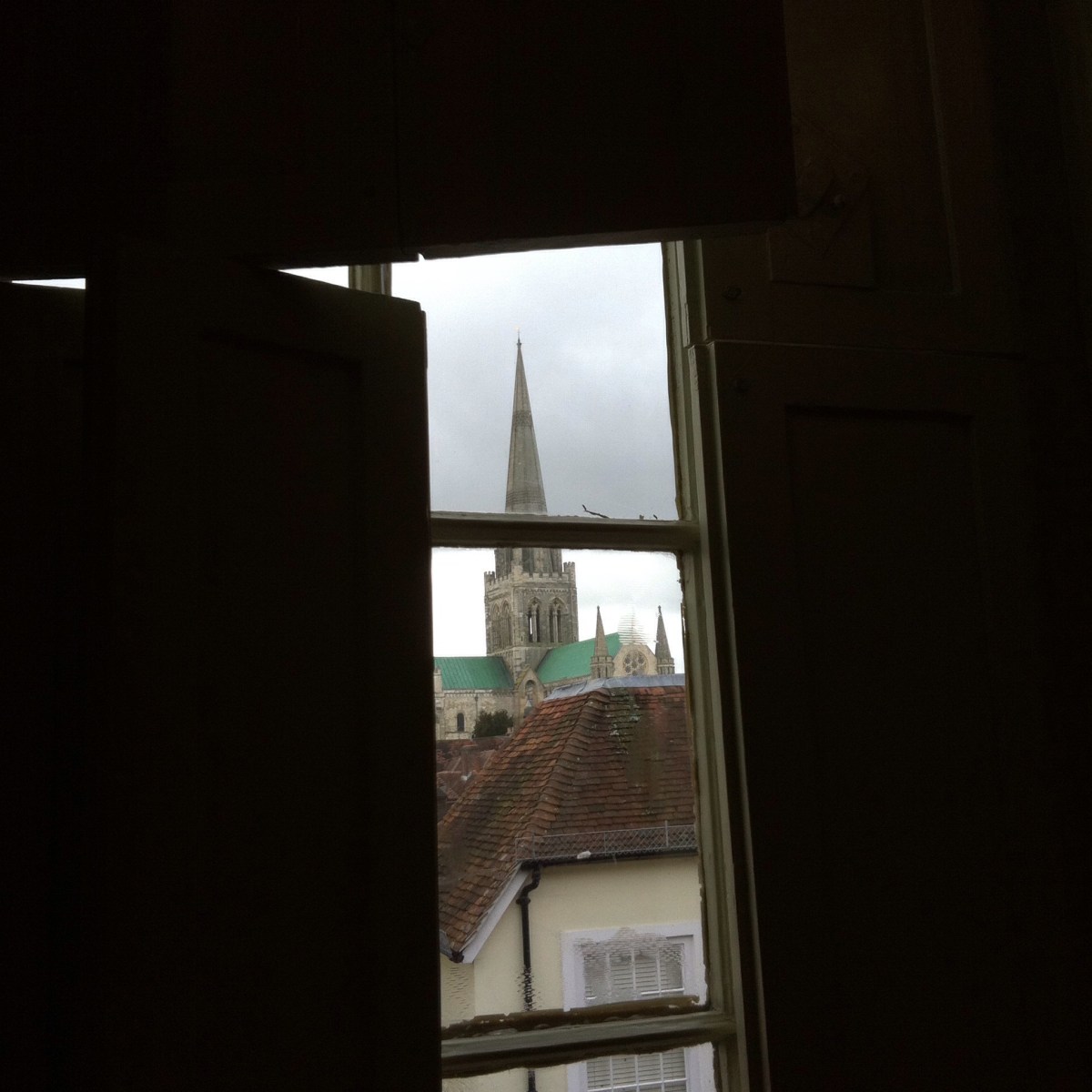
One of my favourite art spaces is the Pallant Gallery in Chichester, in theory three hours away by train (although Southern/South Eastern buggeration made this three and a half) – via something from the market and a coffee first and then a pint post charity shops. There’s a twenty-first century extension, which either filled a gap or replaced some indifferent building, and the Georgian era gallery complete with squeaky floor boards. The Pallant collection specialises in twentieth century art, mainly British, with London and Sussex artists well represented, plus smart local collecting. That the nearby cathedral was and is sympathetic helps.

imageI think I’ll have more to say about Conscience and Conflict: British Artists and the Spanish Civil War, which closes on 15 February 2015 but moves to the Laing Gallery, Newcastle from March. I only know the barest outlines of the war, I’m afraid, a bloody struggle between Nationalists (supported by the Nazis) and Republicans (supported by Russians), in effect extending the Second World War back to 1936. It became a rallying cause for the Left in Britain, with poets, writers and artists heading off to fight or drive ambulances, largely on the Republican side. One atrocity led to Picasso’s astounding Guernica, shown in Britain at the Whitechapel, among other venues. A tapestry version was at the UN for many years, and was covered up when Colin Powell and John Negroponte spoke in front of it in 2003 during the lead up to the conflict in Iraq. The tapestry was moved to be shown at the Whitechapel – it was astounding when I saw it – and apparently is now in San Antonio. The Nationalists won and Spain became an authoritarian society until the death of General Franco in 1975.

Aside from participating in the conflict, there were a variety of responses from British artists. Partly there were various posters and portfolios, raising money or drawing attention to the suffering, starvation and refugees, clearly propaganda but bipartisan as the fund raising drew no distinction between Nationalist and Republican. Most artists were pro-Republican, seeking for Neville Chamberlain to change his neutral stance at the point that he was also appeasing Hitler. Roger Penrose and three other artists spirited Chamberlain masks at a May Day protest. (Burra was ambivalent, distressed apparently by the destruction of churches – a number of cartoons in the exhibition critique the Catholic church; one artist whose name I forget was pro-Nationalist, Wyndham Lewis was also broadly pro-Franco). A number of British artists had visited Spain in the 1930s, perhaps drawn by the light, and so there was the sense of a familiar landscape being destroyed. John Armstrong painted isolated ruins against blue skies – in devastating pictures that recall the surreal cities of Max Ernst. Of course, many of these artists were inspired by surrealism and were part of a British surrealist movement, linked to Picasso via Penrose. The Spanish Civil War seems to be the unconscious to their art – and also the work of Moore and Hepworth. The nightmares of the sleep of reason can also be found in Goya’s incredibly disturbing prints The Disasters of War, inspired by the Spanish Peninsula Wars (1808-14), which I first saw at the Whitworth, and which were shown at the Victoria and Albert Museum in 1938 and provided a language for a response to such atrocities.

There are all kinds of striking works – Burra’s watercolours, Walter Nessler’s Premonition (1937) of an apocalyptic London  and Clive Branson’s (faux?) naïve socialist realism of Daily Worker selling on the streets. Oddly one of the pieces here – Picasso’s “strip cartoon” The Dream and Lie of Franco I – is also on show at the Rubens exhibition at the RAA.

I’m so glad I saw this before it closed — if you can see it in Newcastle do so.

Too Long a Season

I’d somehow missed out on Star Trek: The Next Generation. I’d seen the crossover movie Star Trek: Generations (David Carson, 1994) and even taught Star Trek: First Contact (Jonathan Frakes, 1996) and I’d seen odd episodes, but not the in-depth, episode to episode viewing of a TV-run. Was it on SKY? I didn’t and still don’t have that, but more to the point, aside from a brief period in 1991, I didn’t have regular access to TV between 1988 and 1992. I suppose I knew enough people with boxsets or off-air recordings, but I didn’t care enough.

I came to it partly with a curiosity about the 44 minute story arc. Most American drama has this pattern and for crime it seems to work ok – soapish preamble, crime committed, work the streets, red herring, nab the suspect, interrogation and wry afterword. Firefly also seemed to pull it off, as did Buffy and Angel before it. Doctor Who, on the other hand, doesn’t, although perhaps I’m brainwashed by the sitcom-in-clusters-of-four format of the original run. The alien society is barely established – although the inclination is to be Earth-bound and it cranks the jeopardy up to eleven very fast. Then the Doctor rewrites someone’s DNA or reverses the polarity of the neutron flow and everything is hunky dory timey wimey.

Someone, I forget who, suggested that Firefly (and by extension ST: TNG) works because of a bigger cast. We end up with three parallel narratives that dovetail together. Doctor Who probably bifurcates into the Doctor’s narrative and his companion’s, the companion getting into trouble and needing to be rescued. We get insufficient parallax on the nova. I did recently wonder whether the Doctor, as virtual superhero is so resourceful and fixed that he doesn’t offer the scope for a character arc, the writers instead focusing on the companion’s experiences, taking audience identification too far. We end up with The Amy Pond Adventures or Clara Who? But then the character arcs of virtually all continuing dramas are keyed much more to restoration than the transformation of the feature film.

To be honest, I don’t recall if the original Star Trek was closer in satisfaction to Firefly than nu-Who. It’s decades since I saw more than the odd episode and my tastes are perhaps more sniping. I’d seen and actually quite enjoyed bits of Enterprise, where the missions were a bit rougher around the edges. But the OS crew were my crew and so here we have their replacements. Picard is the new Kirk, clearly an authority figure, less likely to go on dangerous missions, and keeping it more in his trousers than Kirk ever did. The romantic lead duties are passed onto his Number One (stop sniggering) Riker, waved of hair and hairy of chest, and Picard’s BFF rather too quickly. Spock had been the deputy, and science officer, so here we have an android, Data, who is learning to be human (“Call me Pinocchio”) and thus doesn’t have appropriate emotions in his logic. My favourite character of the old series was Bones, but here we have Dr Beverly Crusher, seeming to be an old flame of Picard’s and widow of an officer killed on his watch. Crusher has her son with her, Wesley, presumably an identification figure for the child audience. Deanna Troi is a counsellor, who gets to state the bleeding obvious. Then there’s Geordie, whose accent is as convincing as Scottie’s and who wears a hair band over his eyes. Then there’s Worf, a grumpy Klingon, and Tasha Yar, who seems to be some kind of bouncer for the Enterprise.

So, having made it to the end of the first series, what do I think? The original series was famed for its diversity – it had a woman of colour on the crew as a receptionist. Baby steps. Twenty years later and in the regular cast we have three women – a doctor, a counsellor and Tasha Yar. Being a doctor is arguably above being a nurse (the other female rôle in TOS, aside from love interest), but it is a caring, nurturing profession in theory and she is also a mother. Troi as empath is meant to be all touchy feely and is able to say that she thinks the strangers they meet are hiding things because she doesn’t realise she’s in a drama that depends on such things. Yar, meanwhile, also gets to be suspicious of strangers because that’s her job as bouncer. Although sometimes she gets to operate the transporters. She’s clearly under used and one can only imagine how frustrated the actor was.

We have two actors of colour on the bridge – most obviously Geordie (and there’s an episode when we see a grown up Wesley and he’s pretty impressed by what he sees – could he also tick the diversity box that broadens ST’s notorious heteronormativity?). Then there’s Worf – and whilst there’s no reason that actors of colour shouldn’t play aliens, there’s an allegorical minefield in which seeing aliens as people of colour feeds into seeing people of colour as aliens (see also under: racism and monkeys). As a Klingon he’s presumably stereotyped as a military man (although you should try his delicious angel cakes) but surely Yar is the military officer? Or are there two military officers on this much-vaunted we-come-in-peace (for certain cohorts of mankind) mission?

Not all the regular cast are in each episode, and I get the feeling that the writers didn’t quite know what to do with half of the crew. Of course, you could argue that at any one time a third of the crew ought to be tucked up in bed and so this is to be expected, but we don’t see that kind of daily life. I think the dramatis personae were assembled with issues in mind, but the writers haven’t quite got there. Ah, young Wesley has discovered something but he’s a kid so let’s not believe him. Again.

Let’s take “Angel One” (25 January 1988) as the archetypal episode. The Enterprise arrives at an alien matriarchy in search of survivors from a crashed ship, Odin, and interacts with the local women, although it turns out that all they really needed was a real man such as Riker – because, presumably, a matriarchy is not true equality.

Except it turns out that this was an allegory for the situation in South Africa in the Apartheid era. Excuse me. So are the women Whites and the men Blacks and Coloureds? Or vice versa? How does that work then? Meanwhile, note that with the away team constituted the way it is in this episode, an African American gets to sit in the captain’s chair. Progress, only he comes down with the manflu that is the b-plot of the episode. I’m not at all clear what the episode has to say about Apartheid. “Why can’t we all just get along?”? Star Fleet has this non-intervention policy (which is obviously as consistent as that of Gallifrey in Pertwee-era Who) that is ironic in Reagan’s America and enables the crew to debate Moral Rightness with a not always unbearable smugness.

The final two episodes threaten to rip Star Fleet apart and introduce new aliens, the Romulans. Clearly this is the point when they think they’ve got their mojo. Having carefully established that when space missions last years, crew want their families with them, in “Conspiracy” (9 May 1988) the Enterprise pops back to Earth to investigate a conspiracy. The scheme seems to include worm eating. The Enterprise and Picard turn out to be top dogs in Star Fleet. The following week, in “The Neutral Zone” (16 May 1988), they pick up an abandoned spaceship and defrost from inside it three people from old Earth of a couple of centuries ago. The job of the episode is to demonstrate how far human civilisation has come: a woman is concerned with her children and her children’s descendants, one of whom has her husband’s name (because these things never alter); a man who wants to check his stock market portfolio but not his privilege (and Picard talks about how civilisation is beyond things like money now like he’s some kind of commie) and a man who wants to hit the bars and pick up some ladies (although Riker would be a better wingman than Data, frankly). These are the values the 24th century have left behind. Supposedly. They’ve also left behind incurable diseases and Wesley’s manflu from the plot device holodeck shows how little immunity the crew have to such things.

The Enterprise heads off into the unknown, or Season Two.

Oh, Cysp

Friday the 13th (Sean S. Cunningham, 1980)
Most years I show Halloween (John Carpenter, 1978) as an example of a slasher film, but this year I noticed the likely date for a screening and it was only appropriate to show Prom Night (Paul Lynch, 1980).

Er, Friday the 13th.

Already the mould has become solidified – a range of teens, largely played by unknowns, are picked off one by one, leaving the final girl to fight back. On the one hand, this figure is a feminist rôle model as figure of identification, as active rather than passive, as complicating standard gender archetypes. On the other hand, she’s infantilised as a girl and her fight back extends the duration of the sadism directed at her.

The prologue here is the murder of a couple of teen fornicators at Camp Crystal Lake in 1958 by an unseen assailant, although the real fall is a drowned child from 1957. Two decades later – June 1979 or July 1980, although neither date is a full moon – Annie (Robbi Morgan) is hitchhiking her way to the reopening camp. This can’t end well, although there’s a neat bit when she misgenders a dog.

The real final girl is Alice, non-gendered at a push (Alice Cooper?), first seen chopping wood and doing DIY and resisting the advances of the slightly creepy Steve Christy (Peter Brouwer). Her fellow camp counsellors are killed off one-by-one, the women as spectacles-in-dying, the men more spectacles-as-corpses. Nobody sees nothing. But all the others had sex or drank or smoked – a young Kevin Bacon doing all three.

Should I be coy four decades on? Whereas in proto-slasher Psycho (Alfred Hitchcock, 1960), the protagonist channels his mother, here the repetition-with-difference of popular culture sees the pattern reversed. Whereas in Halloween we see Michael Myers and see him seeing, here the slasher is kept offscreen. The film does not play fair – we neither have the thrill of deducing the villain and eliminating red herrings nor of watching a Columbo figure get their man. Is Christy a nod to Christie, she of Marple and Poirot and much more?

The opening of The Texas Chainsaw Massacre (Tobe Hooper, 1974) references Richard Nixon in the soundtrack – a news broadcast – here a character describes someone as having the worst run of luck since Richard Nixon. Did Nixon have bad luck though? I think he was largely the architect of his own downfall.

Keep the Wensleydale Flying

Shaun the Sheep Movie (Mark Burton and Richard Starzak, 2015)

“But just at that moment, as though at a signal, all the sheep burst out into a tremendous bleating.”

I guess there are spoilers here.

Deep into the end credits of this film, the producers acknowledge their appropriation of Silence of the Lambs – not the property of Thomas Harris or even Jonathan Demme, but of MGM. The pastiche itself – which should fall under the fair use provision for purposes of parody – came at precisely the point that it occurred to me that this was a much thinner film than Chicken Run (Pete Lord and Nick Park, 2000) or Wallace and Gromit: Curse of the Were Rabbit (Nick Park and Steve Box, 2005). Both of those were stuffed full with movie references, whereas this is more cautious in its appropriations. Ownership is respected.

It’s a familiar enough reactionary fable: on the farm the sheep are alienated from the product of their labours, the days ticking by in Sisyphean toil. A dog, lackey of the system, helps the farmer in his exploitation, blind to the ways in which he too is a cog in the system. The very name of the farm – Mossy Bottom – shows its position within society and the stasis of such society.

Come the day of the revolution – masterminded by Shaun – the dog is restrained by a turncoat dog and the farmer is driven into exile. The sheep briefly take over the farmhouse and briefly enjoy the fruits, but the opportunist pigs rapidly take their place in the second part of the June Revolution. Unable to function without a master, the sheep face starvation and follow the similarly interpellated dog into the Big City. In perhaps the most interesting ideological move of the film, the wider system becomes apparent – the dog substitutes for a surgeon and the farmer for a barber. Note how the farmer/barber receives but a fraction of the payment for his work, his excess labour swelling the surplus value of the salon. In a sneaky use of a dual time frame, the farmer becomes gains the status of a commodity whilst the animals remain in Aristotelian time. Meanwhile there is social satire in a restaurant worthy of Buñuel.

As a parable for children, however, the urge is for restoration. Dorothy may get out of Kansas, but she knows there’s no place like home. The Bakhtinian carnival of the central section of the film is but licensed escape and the Animal Containment officer’s encagement of the sheep as strays in the city disguises the cage of Mossy Bottom farm in an appropriately Foucauldian manner. The gate must be kept shut at all times. We prefer it that way.

What Goes Around

Der Kreis (The Circle, Stefan Haupt, 2014)

A minute or so into Der Kreis, a film I knew nothing about beyond that it was being shown as part of LGBT History Month, it struck me that the main two interviewees were coming across like an old married couple. This is not the world’s greatest observation, since Ernst Ostertag and Röbi Rapp are married. Doh. It’s still not something you see that often on film.

Zurich, 1956, and not-yet-certified schoolteacher and semi-closeted Ostertag (Matthias Hungerbühler) is visiting the editorial offices of Der Kreis, a homoerotic magazine in three languages that is tolerated by the authorities. Through this he learns of the balls the magazine organises and at one of these he meets and falls in love with Rapp (Sven Schelker), who he at first mistakes for a woman. As the relationship between the two develops, a number of murders within the Swiss gay community leads to a crackdown on the magazine, the balls and the gay bars and Ostertag risks all by becoming more involved in the magazine.

I was a little torn, watching this, as I gladly would have watched more of the interviews with the surviving participants, and I gladly would have watched more of the dramatisations. The traditional disclaimer at the end of the film notes that some characters have been invented or tweaked, and I did wonder at a couple of moments how we knew X had happened or why we didn’t see Y.  At the same time, there’s a risk of tin bath nostalgia — an abortion scene in a Nottingham Playhouse production of Saturday Night and Sunday Morning (1964) was spoilt for me by the person behind me noting that they had that sort of bath once. If the mix of Der Kreis wasn’t quite right, I’m not sure what I would have sacrificed.

Like Forbidden Love: The Unashamed Stories of Lesbian Lives (Lynne Fernie and Aerlyn Weissman, 1992), this is a testament to real lives that seem both a long way from now and all too familiar. The shift in attitudes in Switzerland show how easily public opinion and legal toleration can change. The cast is excellent, the talking heads instructive, and a little piece of history is preserved.

The Gun Over the Fireplace in Act One

Birdman or (The Unexpected Virtue of Ignorance) (Alejandro González Iñárritu, 2014)

Film has three kinds of meta – the film about the film, which attempts to bite the hand that feeds it without ever really drawing blood (think The Player (Robert Altman, 1992), the film about TV, which is about how inauthentic and cynical that medium is (Network (Sidney Lumet, 1976)), and the film about theatre, which is about a huge cultural cringe and the superior authenticity of the stage. There’s a cameo role on Birdman for Lindsay Duncan, a fine actor, who steals the film as Tabitha Dickinson, theatre critic, in a film full of more acting per square centimetre than is entirely comfortable; she gets to tell Riggan Tomson, former star of three superhero movies, about how awful it is that such folk are taking up space in Broadway Theatreland and that they can’t act for toffee. Ah, one on the chin. A palpable hit.

Tomson is played by Michael Keaton, who was in the first two Batman movies back in the day, and a few movies since but hardly any you could name without looking them up (Jackie Brown (Quentin Tarantino, 1998), Out of Sight (Steven Soderbergh, 1998), Jack Frost (Troy Miller, 1998) and others, and a lot of voice work, it turns out). Tomson’s long-cherished dream is to repay a debt to unwitting mentor, Raymond Carver, by writing, directing and starring in a Broadway adaptation of a Carver story. The previews are not going well, and there is strife with a male costar Ralph, Jeremy Shamos, who is (un)fortunately knocked out by a falling spotlight. A new actor is brought in, Mike Shiner, played by Edward Norton – who was in the semi successful The Incredible Hulk (Louis Leterrier, 2008). Meanwhile, there are potshots at Robert Downey Jr. (Ironman (Jon Favreau (2008, 2010, Shane Black, 2013) and George Clooney (who killed the 1990s run of Batman films with Batman and Robin (Joel Schumacher, 1997)) and a Man of Steel poster on the skyline. (It’s a neat touch that the theatre chosen is opposite one playing The Phantom of the Opera.) It’s a close-run thing whether any of the actors will make it to opening night, let alone that the play will open.

There’s the ex-wife (Amy Ryan), in town for the premiere, the druggie daughter (Emma Stone), looking for redemption, an ex-girlfriend (Naomi Watts) uncertain of her place, a female costar (Andrea Riseborough) who’s in a relationship with Shine and a best friend/lawyer/agent/producer (Zach Galifianakis) trying to hold it together. Fairly soon, you are ready to concede that Duncan’s critic has a point. Who cares about these people?

What ratchetts up the tension is that Tomson is either going through a major nervous breakdown or has both a Sekrit Identity and super-powers. Todorov eat your heart out. Has he? Hasn’t he? Was the accident with the spotlight an accident? Why can’t he control them better? There’s a sense that this is bordering on horror – I misheard Riggan as Regan (as in The Exorcist (William Friedkin, 1973)) at first and the endless tracking shots down theatre corridors began to echo The Overlook Hotel. Redrum! Redrum!

Oh yes, the film is composed of endless tracking shots, pursuing characters from room to room, picking up conversations and actions, kicking sand in Hitchcock’s face for pitiful ten minute takes in Rope. I guess there’s a sense of claustrophobia and being trapped and basically the director can. The director of photography, Emmanuel Lubezki, seems to think that this is the first time anyone has done this. Oh dear. The Player is one example, although it abandons the conceits after the first shot.

And then there’s a highly telegraphed climax where the film really has its cake and eats it, parts of which are visible from the first act and most of which is not as clever as it thinks it is. It’s a wonder that everyone doesn’t wake up and realise it’s all a dream. Or maybe everyone else did but me. I have to say I was reminded of the elegance of Tom Stoppard’s The Real Thing (1982), which folded real life into play into other people’s materials with an eleganc this lacked.

Oh, and in a year where there were complaints about the music soundtrack drowning out the dialogue in Interstellar (Chris Nolan, 2014), we appear to have the soundtrack from Whiplash (Damien Chazelle, 2014) or the longest drum solo in recorded history.

A Plague on Both Your Tin Mines

The Plague of the Zombies (John Gilling, 1966)

The first zombie movie was released in 1968 – this must be true, as I heard this on the radio several times last year (and an article doesn’t quite say it ). So clearly I hallucinated this DVD of a 1966 film I encountered as I work my way through the Ultimate Hammer Boxset. (Although, let it be said, that this boxset is far from ultimate as boxsets go.)

There is a reasonably familiar horror/Hammer narrative. People from London travel to remote village full of suspicious locals and disturbing events. Rather than the bloodsucking vampires of the Dracula films, we have blooddraining zombie masters, and the incomers are a London-based doctor (André Morell) and his daughter (Diane Clare), responding to a letter from a local GP (Brook Williams) about a mysterious plague. Rather than a mittel-European village, surrounded by not even trying day-for-night filming, there’s a Cornish village. They are worried about incomers, just not necessarily about the right incomers.

The vampire narrative is easy to read in Marxist terms, indeed, Marx explicitly writes about capitalists sucking blood and surplus labour/profit being undead. “Capital is dead labour, that, vampire-like, only lives by sucking living labour, and lives the more, the more labour it sucks” he writes in Capital, elsewhere he discusses “British industry, which, vampire like, could but live by sucking blood, and children’s blood, too.” Engels adds, “But here, too, necessity will force the working-men to abandon the remnants of a belief which, as they will more and more clearly perceive, serves only to make them weak and resigned to their fate, obedient and faithful to the vampire property-holding class.“

In Plague we have peasants being turned into zombified labourers through the manipulation of blood. Perhaps to maintain heteronormativity, it’s female rather than male blood being drained. The peasants as zombified slaves are counterparted by drummers from the Caribbean, with the kind of casual racism of Hammer’s She (Robert Day, 1965).

If the real villains of the piece are the squire (John Carson) and the huntsmen, the peasants seem disturbingly disposable – it’s the professional middle classes we’re meant to be concerned for. Indeed, just like Jonathan Harker in the original Dracula, although the doctor Sir James Forbes is closer in class to Dr Seward. We’re not even that bothered about the good local doctor’s wife, Alice Mary Tompson (Jacqueline Pearce), as we know she’s going to turn into Servalan.

It perhaps should be objected that if you want an efficient workforce in your tin mine, than a zombie workforce may not be the best choice. Such has struck me before – in the various cyberslave armies in new Doctor Who somewhat ad nauseam, although that itself possibly begins with the robomen in “The Dalek Invasion of Earth” (21 November 1964–26 December 1964).

CFP: Current Research in Speculative Fiction (CRSF) 2015

University of Liverpool
Monday 8th June 2015
With Keynote Lectures from:
Dr. Andrew M. Butler (Canterbury Christ Church University)
Dr. Sarah Dillon (University of Cambridge)
Returning for its fifth consecutive year, CRSF is a one day postgraduate conference designed to promote the research of speculative fictions, including SCIENCE FICTION, FANTASY and HORROR; showcasing some of the latest developments in these dynamic and evolving fields. CRSF attracts an international selection of delegates and provides a platform for postgraduate students to present their current research, encourages discussion with scholars in related subjects and the construction of crucial networks with fellow researchers. The University of Liverpool, a leading centre for the study of speculative fiction and home to the Science Fiction Foundation Collection, will host the conference.
We are seeking abstracts relating to speculative fiction, including, but not limited to, papers on the following topics:
  • Alternate History
  • Alternative Culture
  • Animal Studies
  • Anime
  • Apocalypse
  • Body Horror
  • Consciousness
  • Cyber Culture
  • Drama
  • Eco-criticism
  • Fan Culture
  • Gaming
  • (Geo)Politics
  • Genre
  • Gender
  • Graphic Novels
  • The Grotesque
  • The Heroic Tradition
  • Liminal Fantasy
  • Magic
  • Meta-Franchises
  • Morality
  • Monstrosity
  • Music
  • Non-Anglo-American SF
  • Otherness
  • Pastoral
  • Poetry
  • Politics
  • Post-Colonialism and Empire
  • Proto-SF
  • Psychology
  • Quests
  • Realism
  • Sexuality
  • Slipstream
  • Spiritualism
  • Steampunk
  • Supernatural
  • Technology
  • Time
  • TV and Film
  • Urban Fantasy
  • Utopia/Dystopia
  • (Virtual) Spaces and Environments
  • Weird Fiction
  • World Building
  • Young Adult Fiction.
Please submit an abstract of 300 words for a 20 minute English language paper and a 100 word biography to CRSF.team@gmail.com by Monday 9th March 2015.
—————————————————————————————————————–
For further information email the conference team at CRSF.team@gmail.com or visit our website: www.currentresearchinspeculativefiction.blogspot.com
CRSF is only able to accept proposals for papers by postgraduate students and the recently qualified. However, all are welcome to attend the conference as delegates. See the website for more information.