My Heart Belongs To Dada

May contain spoilers

The Force Awakens (J. J. Abrams, 2015)

I was seven when Star Wars came out – and I’d swear it had the subtitle then, but I suspect it was a couple of months into the run. I’d not seen The Searchers, The Dam Busters, Hidden Fortress or even Triumph of the Will, so it felt original. I’d probably seen Flash Gordon and Buck Rogers serials, and at some point the Glen A Larson version showed up. I would have seen The Wizard of Oz, but didn’t make the link to Star Wars, but both were modern fairy tales and I knew them, albeit via panto and Disney and Ladybird Books. There was a novelisation, apparently by Lucas, which suggested earlier segments. I didn’t yet know The Lord of the Rings.

There was a space race of blockbusters — Close Encounters of the Third Kind, Empire Strikes Back, Superman — and at some point there was Star Trek the movie, nicknamed The Slow Motion Picture or The Motion Sickness and boy was it dull. But we saw the gang coming together for One More Mission and there’s that extraordinary ten minute sequence when Kirk and Scottie check out the old girl on the big screen. Talk about your male gaze.

And years passed and puberty hit and Empire was clearly the best of the three and the three prequels happened. Oddly the BBC paid me a lot of money to write something about sf for their website and to review the novelisation. I went into The Phantom Menace knowing the plot. But then (spoilers) we knew the ending — Little Orphan Annie Kin is going to go wrong. The poster told us. There were call backs — more westerns, an attack like the one on the Death Star, but only C3PO, R2D2 and x to link us to the trilogy. There was Obi Wan Kenobi, but in an odd non-Guinness style by Ewan McGregor. The prequels were pants.

And years passed and that seemed to be that — although there was an odd Star Trek reboot that felt more like Star Wars, and director J.J. Abrams clearly preferred that franchise.

And then Disney bought Lucas (not Lucas Entertainment) in a no-brained multi billion deal that would pay in terms of merchandising alone, even without a third trilogy and spin offs. Our friend would be back.

So what happens next? Well, Han and Leia retire to the suburbs and Uncle Luke bounces their kids above his knee. Although Han did turn into seventies dad in the original.

Well, Abrams only has one one thing to do — to not kill the golden goose. Because, frankly, the magic bean counters at Gold Mouse Central will have calculated that the deal is repaid by merchandising alone — and endless iterations in Lego.

So we shake the magic eight ball of plot and we find an orphan with exceptional abilities, the finest pilot in the galaxy, a cute robot, a wise cracking sidekick, the finest pilot in the galaxy and a new evil man in black to recreate the original plot, and bring back the older versions of the old gang. This is somewhere between fan service and prick tease — we know from the poster that Han, Leia, R2D2, C3PO, Chewbacca and the Millennium Falcon are back, and can make a few shrewd deductions about Skywalker’s absence from the poster but Hamill’s name on it. There’s a balance to be struck between delayed gratification and seeing what we want.

In a sense the original films were reruns — variations on Buck Rogers and the Flash Gordon Lucas had wanted to make. Both the later films in the trilogy and then the later we-shall-not-speak-of-it trilogy ape that, albeit with diminishing returns. The secret plans of The Death Star (which presumably are on file at the local council offices) are the secret map to Luke, entrusted to the faintly double entendred BB8, the cat to R2D2’s puppy, and inevitably this ends up on the not Tattooine desert planet which is home to this film’s orphan du jour, the kick ass Rey. BB8 is antenna in hand with ex-stormtrooper Finn, whose conversion to the light side is as easily and convincingly accomplished as Annie Kin’s was to the dark.

Incidentally, the crapness of this generation of storm troopers — shuffling embarrassedly out of shot at one point — could be used as a racist argument against diversity… Ooops.

And through such frail travelling coincidences we assemble the old team and the old set pieces — scavengers, trips across deserts, scrap dealers, strangulation by the Force, a cantina, hologram chess… Fan service. Give us what we want.

A character is killed off. Oh yes — although apparently the director was so enamoured with the actor that he is completely unexpectedly brought back. Because the thing we know about popular culture — I’m looking at you, Doctor Who — is that death is simply a matter of contractual obligations. But then, death didn’t slow Ben or Yoda down. So that death that comes later is clearly a wrench but there are two more films to play out.

And so we come to the new Big Bad, so evil he has to kill someone à la Vader, Kylo Ren, who hero worships a Vader he plainly doesn’t know. He appears to have a helmet fetish, which cramps in his impossibly bouffant hair style. Incidentally, his looks seem to be be more like an Alan Rickman than his putative father, suggesting his mother has the same kind of morals as Annie Kin’s mother with her “I got knocked up by the Force” cover story. This is a man, nay a boy, with anger management issues, who would throw his toys out of the pram with or without the Force, as witnessed in his really stupid light sabre attacks on consoles. Quite what the even Bigger Bad, Gollum Snope, sees in him remains a mystery.

It turns out that all the films are about relationships between fathers and sons — from Annie Kin’s anonymous trick to Darth Emo’s petulance. If we compare it to perhaps the only other multi-chaptered, anachronous saga — Shakespeare’s War of the Roses plays — we can see how the quasi-patricide of Richard II by Henry IV is still playing out in the relations of (spoilers) Hal and Falstaff and even Henry VI. We have divided good and evil fathers, fathers who can’t measure up, sons who can’t measure up (and as far as I recall, the spoiler of Luke-I-am-your-father, supposedly not known about when Star Wars was filmed and Leigh Brackett’s contribution to the saga, was there in the comic book adaptation released before Empire). Annie Kin’s missing father (and thus under developed superego if you buy Freud) is played out in Darth Emo’s over compensation.

But fathers are there to be obeyed. Well, the good ones.

When Star Wars was released in the late 1970s we had had a run of adult themed, grown up sf movies and were desperately in search of heroes in the post-Vietnam, post-Watergate disillusionments. It made us children again — even those of us who were children. Arguably, Lucas and then Spielberg infantilised the sf genre with their fort da sagas. Again, again! And made shit loads of money. Fathers and sons, sons and fathers (but Indy was the dog).

The Force Awakens is a cosy old set of clothes and slippers and presses the buttons expertly. The question the remaining two films will have to answer is the nature of mothers and sons, but more importantly daughters and mothers. It is to be hoped that Rey gets to stay kick ass, rather than face the domestication Leia endured from agent to slave.

Craven Images

I’ve been slowly working my way through Wes Craven’s oeuvre of films because I thought he would be a good example to teach with of a horror auteur. And whilst so far there have been a fair number of stinking moments, there are a lot of interesting signatures that I’ve been picking up. There was a moment where I pondered that with showing Wes Craven’s New Nightmare as my auteur exemplar and Last House on the Left as controversy film, I should add Vampire in Brooklyn as the vampire film and maybe The People Under the Stairs to explore what horror is.

But you can get too much Craven.

I have to be careful about the original Nightmare on Elm Street and the Scream tetralogy, because I’m teaching slasher films on my Popular Genres and Popular Culture module and there’s potentially student overlap next year. But in going through the material on slasher as feminist genre, I pondered if something needed updating (and ironically, I was teaching this the same day as materials on the monstrous-feminine in the horror module).

I don’t really buy slasher as feminist. I think there’s too much pleasure to be taken in the sexualised sadism against the female characters. The Final Girl is subjected to an extended ordeal. On the other hand, I can see the appeal of a screen character being more than just a victim. In the monstrous-feminine class I showed the softporn opening sequence of the original Carrie, and again I’ve heard arguments about this film’s feminist potential. But when there’s a male director filming a male scriptwriter’s adaptation of a male author’s novel,  I’m not sure how the female perspective can get into it in any entirely convincing way. (Some of the students seem not to be able to acknowledge that the full frontal nudity of the young women in the sequence might be sexualising and objectifying — even as the centra lingers in sift focus and Carrie soaps her body… Or see that this is problematic.)

So somewhere I came across the idea where the slasher  was an index of male anxieties about the role of women. I suspect I read this – but you might want to see Halloween as a response to second wave feminism. I suspect we can then trace the subgenre through reactions to new men and new lads and the antifeminist backlash and Scream is somehow in a conversation with third wave feminism. I’ve yet to sit down and trace this in any detail. Given who the victims of the slasher are, the ostensible villain is acting as the avatar of surplus repression.

Meanwhile, I rewatched Cursed and watched My Soul to Take. The former I suspect is an attempt to do for the werewolf subgenre what Scream did for the slasher. Whilst it has its moments, it obeys the first rule of virtually all werewolf movies I’ve seen: the werewolf will be a dog’s breakfast. The latter film  is a cousin to the slasher — sixteen years before the main plot some guy killed his wife and his psychiatrist and a cop or two and tried to kill the people in the ambulance and may or may not have died himself. It’s a series of set pieces and they barely make sense. He might be barking (but not in a werewolf way); he might be possessed. In the present day, the seven kids born on the same day as he died hold a ritual to face the monster, and one of them dies. 

The teenager of colour, obviously.

Although there’s also visually impaired African American.

Indeed, the teens are killed off one by one, with the twist that it may well be cute little malcontent shy geek Bug who is responsible. Who you think wouldn’t kill a fly. Or it might be his best friend Alex, who is bullied by a stepfather in a one-off scene that might well have been added late on for all I know.

My initial reaction is that it’s largely mindless by the numbers pap, although it passes ninety minutes or so.

It’s perhaps a bit early to think about this film in terms of fourth wave feminism, but I suspect here we have an example of the geek male as hero and a way of tracing the shifting patterns of hegemonic masculinity. Intriguing though Max Thieriot’s performance is — and he has to ventriloquise other characters — I think we’ve already seen the geek hero in a purer form in Jessie Eisenberg in Cursed. And whilst I need to rewatch the film at some point to focus on what Emily Meade’s character is up to, Cursed reminds me of what an interesting actor Christina Ricci appears to be. At some point though, I will need to go and look (again) at the late slasher films to see what they get up to in terms of masculinity and the flatter your audience ploy of putting the geek centre stage. 

Although, of course, in the slasher the most interesting male character tends to be the slasher “him”self.

Out Damned Scott

The Martian (Ridley Scott, 2015)

I hate this. I really hate this. I really don’t have the words to begin to describe how much I hate this. I mean, everyone else loved The Martian.

For a decade or so, I’ve wrestled with two dilemmas:

a) is Tony Scott a better director than his brother?
b) is Ben Affleck a better actor than his old mucker Matt Damon?

I’d think I’d have it resolved and that it was Tony and Ben and then I’d see a film directed by Tony or Ben and suspect I was wrong. I realise that Tony died in tragic circumstances and his oeuvre is complete, but he gave us The Hunger and (the best Tarantino film) True Romance. On the other hand, Ridley has two genuine masterpieces: Alien and Legend (not, obviously, to be confused with the recent remake). Tony rarely seemed to hint that his films were anything more than vacuous tosh (although with an African American protagonist surprisingly often), whereas Ridley seems to try for the Meaningful and miss, whilst white washing all too often.

Then there’s Matt and Ben. Meh. I’m a fan of Kevin Smith films. What can I say?

Everyone else has done the jokes already — if you want a character who gets left behind and needs to be rescued, Damon’s your man. You’d think he’d get the message. So, as in the book, Matt Watney (Watt Damon), has been left behind in a sandstorm on Mars and begins to work out how he can survive until the next mission survives. There’s rather more of the crew than there is in the book, softening us up so we actually care when one of them dies.

And then, otherwise, there’s a fidelity to the book. Damon might strike you as being more buff than normal, but that allows for the malnutrition of later sequences and film is much better at given you a tabula rasa onto whom the audience can project emotions than a book in which the author has to tell you what they are thinking. The mission log can be used to justify voiceover, but it isn’t overwhelming.

The fidelity is a problem. Just as it is a bit of a wrench when we cut away from Watney to Earth for the first time, so it is here. The parallel editing is surprisingly clunky as characters wonder “I wonder what he is up to right now?” or “Do you think he’ll work this out?” out loud. For a Ridley film, the cast is surprisingly more multiethnic than of late, although there are a couple of whitewashing. And there’s also, spoilers, some additional sequences at the end to Get All Meaningful. To turn it into a recruitment ad for NASA.

And somehow Damon can pull that odd combination of nothing-special and resourceful man. The NASA team balance that concern and bureaucracy. This is a film — like the book — where the only enemies are the cold equations. The lone astrogating genius perhaps needed to have his performance dialed back a bit, and I was uncomfortably reminded of the Random Pot Smoking Rastafarian in Thelma and Louise. There’s a geeky Lord of the Rings reference in the novel which gets repeated here, with added nuance that Sean Bean is in the scene.

And of course, we know that Sean Bean has to be killed off. It’s what he does well.

So, unbelievably, and I hate this, Scott has produced a reasonable film. I think Moon and Gravity pull off similar situations of isolation with more aplomb, and there are similar moments of massive disbelief suspension, but this might be the first non-crap Scott film since well… well… his Hovis ads.

Take A Chance On Me

Take a Chance on Me

Risk (Turner Contemporary, 10 October 2015-17 January 2016)

The Anthea Turner — a gallery whose Chipperfield design works better in Wakefield — is committed to always showing some J. M. S. Turner and contemporary art, for which read the past one year’s except when it suits them. They’ve had some great solo shows (Mondrian and Colour was frankly more interesting than the Liverpool Tate show), which are interspersed with themed shows. The second exhibition, about Youth, was amazing, Curiosity had some good items but wasn’t more than the sum of its parts and the Self left me a little cold.

So, Risk. Art which puts the artist at risk or may offend against dominant values?

Well, yes, Ruth Proctor films herself falling off a scaffold onto cardboard boxes (here is the scaffold, here are the boxes), Bas Jan Ader documents the start of his transAtlantic voyage that was never completed, Ai Weiwei gives various landmarks the finger. Meanwhile we have surgery footage of Orlan’s cosmetic surgery, Gregor Schneider’s faintly uncanny film of two neighbouring houses redecorated to be identical, Martha Abramovic leaning back from a bow and arrow pointed at her heart.

But then it’s extended to chance and fate. Gerard Richter scrapes back at his paint with a squeegee, post Minimalists let their art hang according to gravity, Marcel Duchamp drops string and Chris Burden drops steel beams into wet concrete.

And then, brace yourself, Turner experiments to see how different paints dry or soak into paper.

Careful now.

There’s a print of an old life jacket and a reconstruction of an ancient Chinese earthquake detector.

What there isn’t is any Jackson Pollock who also allowed chance into his aesthetic through pouring and dripping or Helen Frankenthaler with her too-wet paint or Frank Bowling’s dribbles. One might object that being open to chance is an abandonment of craft, but presumably there’s a selection process. There’s a film (whose makers I forget) which is a kind of mouse trap sequence, where rolling ball sets off a chain reaction. We don’t see however many versions didn’t work. And we don’t see what Duchamp did with the templates he made from the string.

There wasn’t any art that has been banned or challenged (Mapplethorpe’s photos, Magritte’s nudes might have been interesting, some of the vandalised art show at Tate Britain a couple of years back).

The biggest risk here, of course, is that there is such a show in a multimillion pound gallery in one of the more deprived corners of England — Margate was a Portas town, its twin industries of TB recovery and funfair being undermined by progress. Like Gateshead’s BALTIC, another venue which is curated rather than collected, it could simply do crowd pleasers (such as Grayson Perry), but instead challenges its clientele. It has to risk failure.

With a few exceptions, alas, in this it was a success.

Meanwhile, a ten minute walk, a megabaguette, a thirty minute bus ride and another ten minute walk away there is the UpDown Gallery, which specialises mainly in limited edition prints. ive not caught every show there, but those I have I’ve liked.

Upstairs, ending really soon, is the work of Loukas Morley, a ready-made artist in the tradition of Beauys with the colour sense of Hodgkin. Painting on various types of wood, either circular or rectangular or squaregular, clearly on the flat, he builds up layers of paint and resin, abstract yet active, usually allowing the ghost of the grain below. There are also witty sculptures – a board rubber, plastic lids from spray paints, crumpled metal á la John Chamberlain, a lemon as still life. He has been curated by Cedric Christie in the past and I suspect a cross-influence.

Meanwhile, downstairs, ending really soon, is Martin Grover and his (to be honest, annoyingly titled) The Peoples Limousine. It would be unfair to call Grover (like Magritte) a one-joke artist, even if it is a funny joke. He specialises in fake bus stop signs, wring out variants on the symbols, possible stops and kinds of route. One refer to Talking Heads songs, another to British movies set in London (Going Places: The London Nobody Knows/Meantime & High Hopes/Seven Days to Noon/The Fallen Idol/The Bells Go Down). Yes, it’s arbitrary, but it’s done with wit and charm.

There are also lists of lists, masquerading as compilation albums, depictions of famous musicians (Barry White, Marvyn Gaye) wandering around London or past CarpetRight. And then my favourites: The South London Procrastination Club (Established: not just yet). There’s a hint of the thirties railway destination poster about his more straight forward prints, but any of them should put a smile on your face.

It’s too late for this show — unless you go on Sunday — but keep an eye out.

Out Damned Scot

Macbeth (Julian Kurzel, 2015)

I suspect — because it was my O Level set Shakespeare — that The Scottish Play was the first live Shakespeare I saw; a People Show production, I’m guessing at Nottingham Playhouse, with Bernard Hill and Julie Walters in the chief roles. We imagined, given it was the era of Boys from the Blackstuff that they’d play to their accents — The Scouse Play if you will — but it was played straight. Possibly even Scottish. We may have seen a BBC version, but what stays in the mind was Roman Polanski’s 1971 version with lots of violence and nudity.

And Keith Chegwin.

It was the first film he made after the Charles Manson stuff, the murder of Sharon Tate, and the violence is brutal — it precedes the rape/statutory rape scandal and the murky depths of whether he skipped justice or an unwise plea bargain. It is hard for some to watch a Polanski without the spectre of his life. The Scottish Play is a cursed play. Which is why you should never say “Macbeth”.

Gak.

And there was a Sam Worthington version a couple of years ago and now we have the version which Zack Snyder would direct in the tradition of 300 Spartans, but without the leather shorts.

Shame.

Plays are not films — the filmed play can seem stagy and closed in, but if you open it out you probably have to cut stuff to make room. Chunks of Shakespeare are scene setting, of course, his stages being almost bare rather than Wagnerian epics, so you can trim. The important thing is you can show rather than tell.

Oddly, however, the director felt the need to give us a written prologue that explains that a long time ago, in a country far far away, England was invading Scotland and Macbeth was top warrior. Why have a bloody man tell King Duncan the plot when we can read it?

We also have an invented scene of a burial for Macbeth and Lady Macbeth’s child. This is significant because at some point MacDuff, whose younglings have been killèd, says (perzoomably of Macbeth), “He has no children” and yet Lady Macbeth suggests that her breasts beasts have given sup. Either we posit that she is on a second marriage or a dead bairn. The two of them are thus grieving for a lost child, which they compensate for by arranging for lots more children to be killèd.

The decision seems to have been taken to play the action somewhat like a western; lots of open spaces and a slow burn (for what is a short and nippy play), although more to the point, none of the actors seem to open their mouths, which are for the most part covered in thick beards. Knowing the original text helps in working out who is speaking.

There are other liberties. Post battle, Macbeth — thane of Glamis — and his mate Banquo run into the three witches, who tell them that Macbeth is going to be promoted and Banquo should be proud of his children. Three witches, the three graces, the Virgin, the Mother and the, er, Other One.

Bloody Terry Pratchett rip-off.

Only, here there are four witches, and a child and a baby. Odd. Makes no sense.

So, Macbeth and his wife live in a simple yurted community with I think a Scandinavian church (or is it a feast hall?) and Shakiecams* follow their plotting to murder Duncan (David Threwfell) and pin the blame on his bodyguards. Then we’re meant to get one of the least funny clowns in the Shakespearean canon talking about brewer’s droop, but that gets cut. There’s some odd business with Duncan’s son Malcolm, which I think has been added, and then everyone buggers off the Bamburgh Castle and a Norman-style cathedral that pushes at the anachronistic. I mean, I suspect it’s about fifty years too early to be possible, and hardly seems likely. Meanwhile, they’ve finally found a tripod for the camera but can’t be bothered with continuity editing.

It’s been a long time since I saw the Polanski version of this and I know some people who would refuse to watch it on principle (and wasn’t there a Orson Welles one?), but however problematic it was, I don’t recall it taking one of Shakespeare’s shortest, speediest plays and making it just a tad dull.

Even if you did get Keith Chegwin.

* Shakiecam. As opposed to Steadicam. But there’s a pun there if you look hard enough. Possibly.

What we want is Watney’s

Andy Weir, The Martian (2011)

So there are exceptions — the Watership Downs and The Chronicles of Thomas Covenant the Clenchers — which get rejected by dozens of publishers and then become bestsellers. And there’s the self-published which become bestsellers when they’ve gone mainstream. One has to admire Andy Weir for his success — which seems to have been ordained even before we learned that Ridley Scott was going to get his mitts on the manuscript.

Lots of books get optioned.

Some writers live on this — hoping the bloody film never gets made.

This time it did, but I haven’t seen it yet.

So, we have an astronaut, Matt Watney, on the red barrel planet, who gets separated from the rest of his crew in a sandstorm and is left behind. Or, since he’s telling us the story in the first person, possibly he’d nipped for a slash behind the yurt and got distracted. Anyhow.

Because he’s never read Joanna Russ’s We Who Are About Too…, he decides to Rebuild Civilisation by planting potatoes and keeping going until NASA can send a rescue mission. He sits there and does all the calculation in a sort of rivet-counting engineer in Heart of Darkness way, but we have not sense of jeopardy because it’s in the first person and it would be really naff to suddenly switch viewpoints and add This is the last of the tapes we found and Watney’s body was found buried under the sand. On wonders a little about the balance of amino acids he’s going to get with rations and potatoes, and surely the lunacy induced by just eating potatoes is higher than the lunacy of being on your own for four hundred days or being forced to watch nothing but seventies reruns and listening to disco.

Oh yes, yet another sf novel where the protagonist know no culture produced after the date of the novel being written.

There’s a certain kind of purity that comes from a tight focus on a single character.

…and then the action suddenly switches to Earth and NASA and what they want to do with it. They begin to anticipate what Watney will do and how rescue him, and set a new deadline for him to survive to. There are convenient other spaceships around to borrow and presumably extra rations for the rescue team and at least now we have a sense of jeopardy because we don’t know what Watney’s up to…

… only we do cut back to him and we aren’t really allowed to think he’s dead for more than half a page. At least once we get to the third person — and sometimes we see Watney from the third person and in italics if I recall correctly, so there is hope that he might die after all. At any point it could all go horribly Pete Tong.

It reminded me of two earlier novels — but not the exoticism of Barsoom or the nostalgia of The Silver Locusts or the ontology of Martian Time-Slip or the social richness of Red/Green/Blue Mars. Rather it took me back to Michael Crichton’s The Andromeda Strain, which confuses pedantry with verisimilitude, and Ben Bova’s Voyagers, which has that international glossiness. Every one is competent, there are no real antagonists except the universe itself.

You might argue there are no people.

Hmmm.

It’s a long time since I saw Robinson Crusoe on Mars, but I suspect that was a lot more fun. But this is that reasonable novel that does its job and yes, does keep you reading. But I’ll forget it within the week.

Because You’re Hepworth It

Barbara Hepworth: Sculpture for a Modern World (Tate Britain, 24 June-25 October 2015)

I’ve already written a rather grumpy account of this exhibition, which has a few things that annoyed me. I should also add that the plinths bearing the sculptures could do with a second label describing the work, since sod’s law meant that on almost every occasion I would look at the other three sides first. Sometimes, of course, the label turns out to be on the wall. Grr.

I was fairly sure, however, that the work would transcend my caveats — and so, having read the catalogue, I went back for a second look.

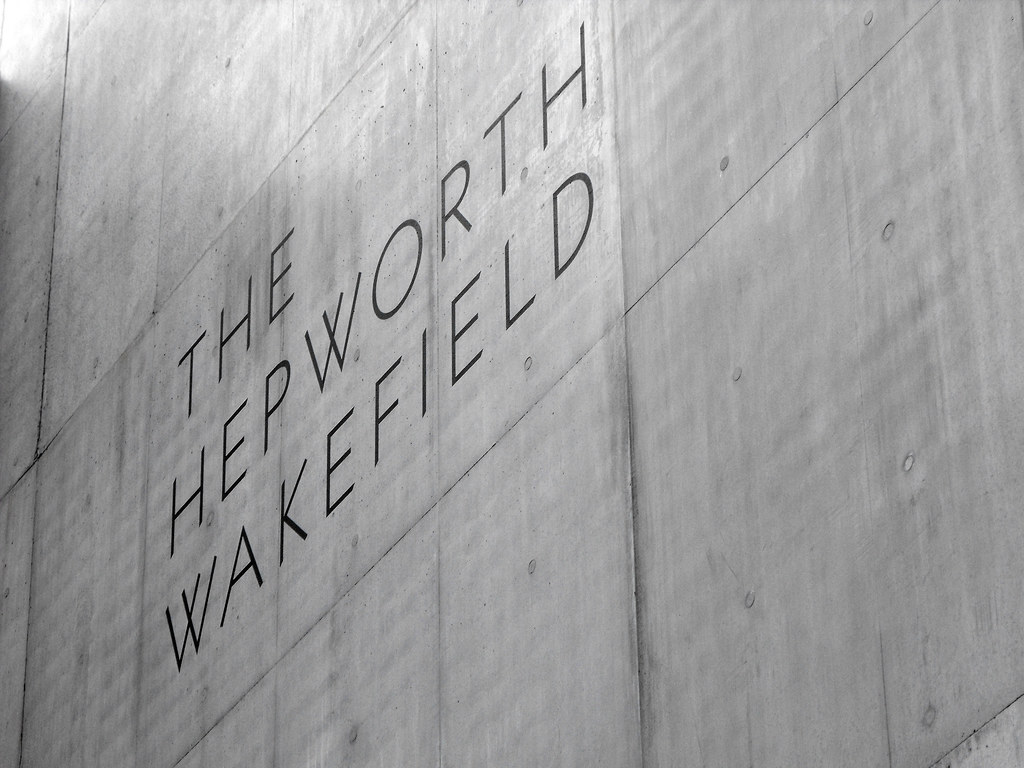
WakefieldMeanwhile, up in Wakefield, the Hepworth is showing a film of the 1968 Tate Hepworth retrospective made by Bruce Beresford. What strikes me immediately about this is how many of the works of art are freely visible and not behind glass. I guess that she was still alive then and could have repaired anything that got broken — the insurance is presumably much higher now. It is so frustrating though. We’re told (she tells us? — and I get the sense from this film of Hepworth speaking unlike the bloody awful Dudley Ashton Shaw Sculpture in a Landscape documentary where a highly theatrical Cecil Day-Lewis intones Jacquetta Hawkes’s poetry in an odd example of barking despite having a dog of your own) that she is interested in the oval, the vertical and the human. From my notes — maybe from the film — I’ve written

inner and outer form, nut in shell, child in womb, shell/crystal, puritanical and geometric spiritual

And then I’ve added (and this is me): modern or romantic (and that is a ponder for another post).

So we’ll walk through the rooms again — beginning with the maze of vitrines. This is her early handcarvings, broadly speaking figurative, realist, mimetic. There are animals, torsos, seated figures and a baby. These works are direct carved on various kinds of wood and marble, and the missing name here is Leon Underwood, who seems to have been the master of the technique.

Hepworth’s shown here among her contemporaries, largely — husband John Skeaping, Henry Moore, Jacob Epstein and I noted two women, Ursula Edgcumbe and Elsie Henderson for future reference. The cynical side of me wonders if this downplays her — she was not unique. Skeaping’s Buffalo (1930) in lapis lazuli is beautiful and I think her side by side doves (1927) are better than Epstein’s one on top of the other (1914-15), but frankly you want your Picasso for doves and Epstein’s strengths lie elsewhere. The positive side is that she can hold her own in a wider community of sculptors between the wars. Infant (1929) is perhaps the most striking, the narrow Torso (1932), made from African blackwood and more like a totem, is the most Hepworthian.

By this point, of course, she had been born in Wakefield in 1903 and studied art in Leeds (meeting that Henry Moore chappy), moving to London where it was as cheap and as easy to get to Paris and Europe than back to Yorkshire. (There’s your north/south divide in a nutshell.) She was runner up to a prize that took her to Italy and which was to inspire her work and led her to marry the actual winner, John Skeaping.

She split from Skeaping in 1933 — the catalogue suggests in part that he was not sympathetic to her Christian Science — and had already met Ben Nicholson who at that point (1931) was married to the artist Winifred Nicholson. The two became lovers and moved in together. So in the second room we have the fruits of their lives together, with artists of different ages inspiring each other. The cynical reading is he helped her, the radical reading is she helped her. I write as a fan of Ben Nicholson — who triangulated romantic landscape, still life, abstraction and the faux naïf. His landscapes flatten into abstraction, and through the 1920s and 1930s the shapes became simplified into squares and rectangles — in time he met with Mondrian, although I think the link was more through Winifred. In time he removed colour, to produce a kind of white, almost flat, sculpture. His art seems to be an exploration of how much can be removed from an image and remain something you can see.

It has to be said that the influence of Hepworth on Nicholson is more obvious than the reverse — I’d be clearer in seeing her as a muse to him than vice versa. Throughout his pictures there are a series of double faces in profile, reduced to lines, intersecting, overlapping, Mr and Mrs. We see this motif in her self portrait in sonogram, and perhaps in one of the sculptures where the face appears to be two intersecting faces. It wasn’t immediately clear what else aesthetically she was getting out of the deal, beyond shifting to a point when she gave more abstract descriptive names for her work. Perhaps he gave her a scratchier sensibility. He was apparently more sympathetic to her religious beliefs than Skeaping had been.

With Nicholson she travelled again in mainland Europe, meeting Hans Arp, Pablo Picasso and Piet Mondrian. She contributed photos of her work to art journals such as Circle and Abstraction-Création (which included Marlow Moss, I see, and had odd ideas about alphabetical order). Mondrian was later to live downstairs from them in London, before his final move to New York. A lot of her pieces of the later 1930s seem to be two smooth pieces — often discs, placed together on a plinth. Apparently both pieces weren’t necessarily fixed, so a degree of adjustment could then be made. Among these pieces were works called Mother and Child — the Madonna and Child trope being oddly missing from the first room — although apparently she broke from tradition by having these as distinct rather than single pieces.


In 1943, she seems to have started adding string to her work. I seem to recall Moore did something similar, but I don’t know who got there first. Sculpture and Colour (Oval Form) Pale Blue and Red (see what I mean about those titles?) is white, almost eye shaped, but hollowed out with two holes. In one you can see the blue interior, and red strings from the edge of the hole to a single, vanishing, point. It is as if goes to infinity. Through the other, side, hole, you can see the strings from a different angle.

By the fourth room we’re up to the Second World War. One side has some of the drawings and paintings she did in a hospital of various operations, after her daughter was ill, apparently intrigued by the similarities between doctors’ and artists’ hands — and I think I saw more of these at Mascalls Gallery once. You need a strong nerve. Another wall has more abstract pieces — the exegetical text tells us she didn’t have time or space for more during the war, but the Hepworth in Wakefield notes the way that she used two dimensional work as a way into sculpture as well as on its own merits. But central to the room are four pieces of carved wood, Pendour (1947), Pelagos (1946), Wave (1943-44) and Oval Sculpture (1943), some plane, some elm, all but hollowed out and curled. They perhaps have the look of hazelnuts nibbled by squirrels, but are beautiful and the best pieces in the exhibition.


By the fifth room time begins to trip over itself. At some point she’s moved to St Ives and has a studio where she lives with a garden space and has rented the Palais de Danse as a second studio. She has become more ambitious, wanting to make bigger pieces; the catalogue notes her wish to crack America. Around three walls we see photos of some of her works in the studio and in situ, her big pieces for Mullard electronics (1956), John Lewis (1963) and the United Nations (1961-64), and we also see her montages imagining sculpture in rural or modernist locations. This is also the room with the ropey documentary.

Behind it, the exhibition redeems itself — four pieces made from a heavy African wood called guarer. The catalogue explains there is a mystery as to who got the wood for her and who paid for it, and what happened to the parts left over. They are larger cousins to the wooden pieces in the previous room; they seem to be experiments in how much you can take away from a form and still have some form.

Ah, you can look, but you mustn’t touch…

Finally, there’s the recreation of the Rietveld Pavilion (1956); concrete air bricks for a wall, partly filled in, some kind of wooden roof, and (here) an end wall purporting to be forest. Hepworth’s work was shown here in 1965 and since. It doesn’t fool us we’re outside, but there are five or so bronze pieces. Some have forms within forms, are twisted, some might be weathered anvils. These are clearly not mimetic, but nor do they feel organic — they are their own thing. Their sublime beauty is enough to make you forget that it’s not until 1975 that Hepworth died, in a fire.


But Hepworth is at her best in St Ives and Wakefield and the Yorkshire Sculpture Park and Edinburgh Botanical Gardens and at the front of Tate Britain and in a garden on Attebury Street.

Watts the Name of the Gallery

The Art of Bedlam: Richard Dadd (Watts Gallery, 16 June-1 November 2015)

I wonder when we first associated art with madness? Perhaps the cave painters were seen as magical because of perceived links between bison and lunch. Certainly by the time of the Greeks we get all the stuff about muses and possession. We are fascinated by Blake and his angels and Syd Barrett and his madcap laughs and Spike Milligan and his depressions.

In the early to mid-nineteenth century we have mad poet John Clare and mad painter Richard Dadd.

Dadd was born 1817 in Chatham to a father who was clearly an intellectual mover and shaker, involved with the local philosophical and literary society. But they moved to London, specifically to Sussex Street, just around the corner from the Royal Academy of Arts (pre Somerset House days and pre-Burlington House presumably), and little Richard began to train as an artist. His reputation seems to have been made by a painting of Puck, a large child-like figure sat in the centre of a round picture in front of a crescent moon, with smaller fairies dancing around him.

He was commissioned in 1842 to travel with former Newport mayor and barrister Sir Thomas Phillips (1801–1867) on a grand tour, painting his way in Greece and Egypt and the Holy Land. There is a stunning picture of a campfire in the desert, a stripy blue sky, and, most curiously, the moon pierced on the top of a lance, although this is thought to have painting after his return. The painting, The Artist’s Halt in the Desert (c. 1846), disappeared into private hands, only to be rediscovered on The Antiques Road Show in the 1980s.

By then, Dadd’s mental health was already deteriorating — perhaps due to the heat, perhaps due to the exoticism, perhaps due to an existing condition. He was sent home. Back in England, whilst on a walk, he murdered his father and escaped to the continent. He might have escaped, but on the train he tried to kill two of his fellow passengers. He was overpowered and arrested and sent to prison in France for a year. In time he was deported to England, where he was put on trial but was declared criminally insane. For two decades he was incarcerated in Bethlem, then on the site of what was to become the Imperial War Museum, before being moved to the newly built Broadmoor where he died and was buried in 1886. As Nicholas Tromans points out, his period in the asylum coincides with the Foucauldian epistemological break of the regulation of mental health by doctors, and the growth of case records.

Whilst in the asylum, he was allowed to paint with greater or lesser freedom and resources, with one of his physicians, Charles Hood, becoming a collector of his work. This was partly therapy, partly because Hood was a connoisseur. There is a picture, Portrait of a Young Man, which is thought to be a portrait of Hood in an imagined leisure garden at the asylum; on the other hand there is a satiric piece The Curiosity Shop, which features a “connoisseur” looking at a picture through binoculars. Was Dadd playing games with Hood? Meanwhile he produced a series, Sketches to Illustrate the Passions — hatred, agony/raving madness, Ingratiation or self-contempt, deceit or duplicity, anger, grief or sorrow and patriotism — that seem to be a diagnostic set of mental conditions. The latter features two elderly military types, smoking pipes, in front of a map “A General Plan of the City of Olabolika” and a plan in incredibly tiny print.

All of these pictures are on display in this Watts Gallery exhibition, but that is to get ahead of ourselves.
Continue reading →

Pot Look

Grayson Perry: Provincial Punk (Turner Contemporary, 23 May 2015-13 September 2015)

Grayson Perry has his USP: the crossdressing, his alterego of Claire. This has speeded him on to National Treasure status, alongside his Turner Prize, Channel 4 documentaries and Reith Lectures. As always the avant garde and the rebellious is absorbed into the mainstream.

The Anthea Turner show acts as a retrospective and was heaving both times I went. I hope this is an appreciation of his work rather than a Dreamland ride of aghastness. You are repeatedly warned that some items on display are not suitable for children. They’re certain not suitable if you aren’t open to irony.

Because irony was the mode I was operating in. In a vitrined at the halfway point of the exhibition is a leather one piece motorcycle suit, with customised wording. It’s Thom Gunn drag, the hypermasculine, but from Essex rather than Kent. Does he love or hate Essex? Mockney Essex Boy Jamie Oliver is invoked at at later point. Pukka. Does he love or hate working class culture? Does he love or hate middle class culture? Does he love or hate arts and crafts? Does he love or hate the art world?

The first room is a series of pots — for the exegesis you have to consult pink handouts with the titles and descriptors of each pot, although the numbering is at random. I Love Beauty is one of the simpler ones — muted palette, a St Eustache-style deer vision, a Union Falg in monochrome, a woman (Claire?) holding sceptre and bird. Football Stands for Everything I Hate echoes the Eurocup, but with a list of pet hates: shouting; special brew; chewing gum; duvet covers and so on.

The second room was the hest to my taste — although here is where we get the most exegesis as to his background. More pots, tiles for a house, archive matials and a series of engravings: A Map of Days; Map of an Englishman and Print for a Politician. The latter is an imaginary landscape of a battleground, labelled with special interest grouos such as atheists, broadsheets, teenagers, gifted, fitness fanatics, Modernists, republicans, countryfolks, non-smokers. Which side are you on? It is encyclopedic without being completist, whimsical in its arbitrariness. Which side is Perry on? A similar aesthetic is at work in the other two etchings — qualities, moods and so on.

The third space, with the motorcycle suit, has two films, the less said about the better (there is also one in the second room), but then I’ve a low tolerance for filmed art. I’m sure he and his friends had fun, but we’re at a disadvantage in coming in oartway into 47 minutes and note really being able to hear the sound. My loss, perhaps.

The final room has three of his tapestries, handdrawn onto PhotoShop and then made on a computer controlled loom. Whilst in Tracey Emin’s tapestries shown here a few years ago, the labour of socres of women in producing them was silenced, here the labour is erased in favour of mechanisation. Again the mood is encyclopedic collage — the first piece is Comfort Blanket, A British Citizen at its heart, a stylised queen to the right, a monotone union flag to the left and a list of people and things that offer comfort. Margot Fonteyn, Beatrix Potter, Francis Bacon, David Bowie, Agatha Christie, Jamie Oliver… Is confort good or bad? The Walthamstow Tapestry, from where London bleeds into Essex or vice versa (and wasn’t William Morris from around those parts?), is a tapestry of the seven ages of man, not so much a rake’s progress as a trademark’s progress. Finally there is a work on heaven and pilgrimage, whose name I failed to note, made for his British Museum Tomb of the Unknown Craftsman exhibition: a series of names for heaven surrounded by places of pilgrimage and stylised drawings that need not match the placename.

It is problematic to gender art modes, but there is a tradition of tapestry and embroidery being the work of women. Is the same true of pottery? As crafts they might get conceived of as lesser than the other arts — and then we bounce off that Tomb of the Unknown Craftsman and Virginia Woolf’s assertion that “Anon[…] was often a woman.” Does “Claire” give Grayson access to such folk arts (although let’s note the various sailors’ embroiderings shown at the Tate’s Folk Art exhibition)? On the other hand, just as sf is not a male genre, so pottery should not be a female one. But something makes me twitchy.

I came away feeling a little underwhelmed; it reminds me of some versions of the dérive, where people walk according to some algorithm except when they’re not. There’s clearly a sexualised unconscious being revealed/concealed among the bricolage, and that’s a fair enough schtick. A thing of beauty is a joy til morning, as someone once said and beauty is in the eye of the potmaker. Beauty is a measure of capital and class, among other things.

Meanwhile, it needs to be noted (and applauded) that the Anthea Turner will always display contemporary art alongside JMS Turner. Sometimes an artist will curate alingside her retrospective, sometimes paintings on the theme of the main exhibition will be shown. Here it is noted that Perry uses technology in the making of his work — and Turner was also an explorer of the latest technique. I see straws being clutched at…

Ingen Flyr På Ham

Hans Olav Lahlum, Menneskefluene (Human Flies (2010))

Norway was neutral during the Second World War, but was invaded by Germany on 9 April 1940 and occupied by the Wehrmach until 8 May 1945. About a third of the Jewish population was deported to the camps in German, whilst others fled into exile. Some Norwegians signed up to fight for the Nazis — mostly on the Eastern front — but there was also a resistance movement. This left a bitter legacy for Norway, some of which formed back stories for the Harry Hole novels of Jo Nesbø, all of which I have now read.

So, whilst there are non-series novels to be read, I found a copy of Lahlum’s Human Flies, a locked-room mystery set in 1968. Harald Olesen, a hero of the resistance, is found shot dead in his flat in an apartment building, but no one has seen anybody leave his front door. It is up to Detective Inspector Kolbjørn Kristiansen to investigate and the building is full of secrets — a former Nazi, an American ambassadorial official, people orphaned by the war, those having affairs… K2 (as the detective is known) is aided in this investigation by Patricia, a beautiful and intelligent woman confined to a wheelchair.

Lahlum is a historian by training and it turns out a relative (a great great aunt?) was Dagmar Lahlum, an Oslo member of the Norwegian resistance recruited by Eddie Chapman to work for MI5 — his exploits were recounted in several biographies, including Nicholas Booth’s Zigzag – The Incredible Wartime Exploits of Double Agent Eddie Chapman (2007) and Ben Macintyre’s Agent Zigzag: The True Wartime Story of Eddie Chapman, Lover, Betrayer, Hero, Spy (2007). This clearly had an impact on the novel — of the relationship forged in the war and lost in peace time.

And yet I don’t think I can recommend this. I’ve not read enough Agatha Christie to make the comparison — but there’s a series of one-to-one interviews, a couple of points where the suspects are gathered together (“I suppose you are wondering why I gathered you all here together…”)… It, frankly, drags. The first person narration doesn’t help and the nods to historic events seem perfunctory. Perhaps in 1968 a policeman could work alone and share information with a civilian without trouble, but it’s a novel that feels set in the 1930s rather than the 1960s.